Aluminum Can Buyer Review: Procurement Criteria vs. Food-Contact Safety Checks
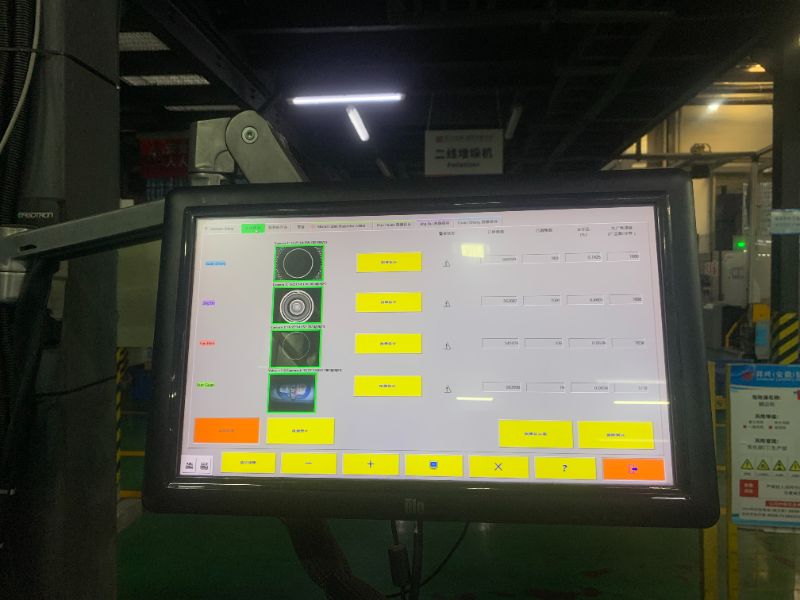
Finished-can inspection is the physical point where a commercial acceptance criterion and a food-contact safety control are measured on the same unit.
An aluminum can purchase decision runs on two checklists that answer different questions. The procurement checklist asks whether a supplier can deliver the agreed can, at the agreed cost, on the agreed date, with the agreed decoration. The food-contact safety checklist asks whether the can's internal surface and seams will stay within food-contact expectations for the life of the product. Both produce an 'approved' verdict, but from evidence that is collected by different people, at different moments, and judged on different pass/fail logic.
This review places the two tracks side by side. It shows where they overlap — inner coating condition and leakage risk are the two clearest meeting points — and it sets out a practical order for running them so that commercial terms never get locked in ahead of safety evidence. It is written for importers, distributors, brand owners and procurement managers in the beverage, beer, coffee and fruit-wine categories who are evaluating metal can suppliers, including Chinese manufacturers.
The Problem: Two Review Tracks, One Purchase Decision
The commercial procurement review is a supplier and cost review. It measures minimum order quantity, Incoterms, unit price basis, production capacity against your run rate, decoration scope, inspection method, payment schedule and after-sales arrangement. Its output is a purchase order with terms attached.
The food-contact safety review is a materials and process review. It measures what the internal lining is made of, how the lining's bond strength is verified, how seal integrity is tested, and what documentation accompanies each production batch. Its output is a compliance file that supports a food-grade claim in your market.
Two failure patterns recur when these tracks are run in the wrong order.
· Commercial-first lock-in. Price, MOQ and payment terms are agreed, then safety documentation is requested. Once the commercial frame is fixed, a buyer has little leverage to require additional testing, batch retention samples, or a different lining specification.
· Certificate-as-substitute. A test report is treated as proof of every future shipment. A report describes the tested scope on a tested date; it does not replace incoming-material verification or batch-level controls.
Decision rule: any safety item that can be measured at pre-shipment should be converted into a written procurement acceptance criterion before production starts. The reverse does not work — a commercial clause cannot retroactively create safety evidence.
Industry Background: Why Aluminum Cans Need Both Reviews
Aluminum cans and other metal cans are used across carbonated soft drinks, beer, coffee, energy and functional drinks, and fruit wine. The demands differ by product. A carbonated soda can in a 3.5 soda can format holds internal pressure; a beer can must hold pressure and protect flavour; a coffee can and other cans with lids may be filled hot or cold; a fruit wine can carries acidity that stresses corrosion resistance. The same aluminum tin can format therefore does not carry the same risk profile across categories.
Physically, a beverage can is formed from aluminum coil, stamped and deep-drawn into a cup, formed into the can body, decorated, and protected internally by a coating system. Two features separate a can from a glass jar or bottle: the drawn body, where the metal and its coating are deformed together, and the seamed closure, where the lid meets the body. Food-contact risk concentrates at the internal coating and at the seam, not at the external print.
Procurement practice has shifted accordingly. Buyers increasingly ask for report-level evidence — a report number, an issuing laboratory, a named standard and an issue date — rather than a general statement that a can is food grade. That shift is why a single 'supplier review' is no longer enough, and why the two tracks below are normally run by different functions inside the same buying organisation.
IDEA PACKAGE, the packaging brand of ANHUI IDEA TECHNOLOGY IMP&EXP Co.,Ltd., supplies aluminum cans alongside glass and plastic packaging from a manufacturing base in Hefei, China, and holds ISO 9001, FDA and CE certification across its facilities. Its aluminum can line is the reference case used throughout this review.
The Detailed Solution: A Two-Track Review Model
Track A — The Commercial Procurement Review
The procurement track judges whether a supplier fits your commercial and operational reality. Seven criteria carry most of the weight:
1. Minimum order quantity. IDEA PACKAGE sets a 100,000-piece MOQ for standard mass-production pricing. Below that threshold, tooling and setup time dominate the unit cost.
2. Price basis and Incoterms. FOB, CIF and EXW are all offered, which matters because the Incoterm changes who carries freight risk and who controls the container loading date.
3. Production capacity against your run rate. Monthly capacity of 300,000,000 pieces is the ceiling to compare with your forecast, not with your first order.
4. Customisation scope. Logo, packaging, graphic, printing, color, coating, size and capacity are the customisable dimensions under OEM/ODM. 'Coating' appears in this list as a commercial option — which is precisely where the two tracks begin to overlap.
5. Inspection and acceptance. Pre-shipment inspection is performed before goods leave, with a test report provided. The test items and AQL are agreed before production starts, not after.
6. Payment schedule. 30% T/T deposit before production, 70% T/T against a copy of the B/L.
7. After-sales support. Remote support is the stated arrangement, so the practical question is how quickly technical responses arrive during a filling-line issue.
Track B — The Food-Contact Safety Review
The safety track judges whether the can is fit to hold a beverage. It rests on documented controls rather than assurances:
· Lining specification. The inner lining is BPA-free by specification — a design statement, not a test result.
· Incoming material verification. Each incoming batch is checked against its Certificate of Analysis (COA) before production.
· Batch retention samples. A batch retention sample management system keeps reference material from production runs.
· Seal integrity. Every unit passes a 100% airtightness test before shipment, under seal integrity control.
· Closure control. Cap torque is controlled as a monitored parameter.
· Coating adhesion. Coating adhesion testing verifies the bond strength of the internal coating.
· Third-party migration testing. A BPA test report, number ZTS25012103ERC, was issued on 12 February 2025 by Shenzhen ZTS Testing Service Co., Ltd., covering BPA testing of aluminum can coating against Regulation (EC) No 1935/2004, (EU) 2018/213, (EU) 10/2011 and CEN/TS 13130-13:2005.
· Safe-use instructions. Hand-wash with a soft sponge; avoid steel wool or harsh abrasives that could damage the coating.
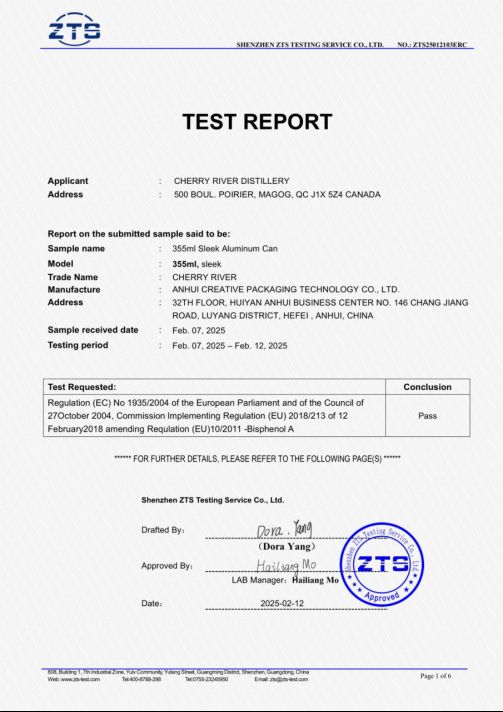
Report-level evidence: BPA test report ZTS25012103ERC, issued 12 February 2025 by Shenzhen ZTS Testing Service Co., Ltd., covering aluminum can coating.
Where the Two Tracks Overlap: Inner Coating Condition
Inner coating condition is the single most important overlap point. In the procurement track it appears as a customisable option in a quotation. In the safety track it appears as a specification with a COA check, a retention sample, an adhesion test and a safe-use instruction attached. A buyer who discusses 'coating' only in the quotation has an option; a buyer who moves the same subject into the acceptance criteria has a control.
Coating delamination is the failure mode behind that overlap. If the internal coating loses bond strength, the metal surface is exposed to the product. Coating adhesion testing addresses bond strength at the supplier end; the safe-use instruction addresses handling after delivery. Neither replaces the other, and neither is captured by price negotiation.
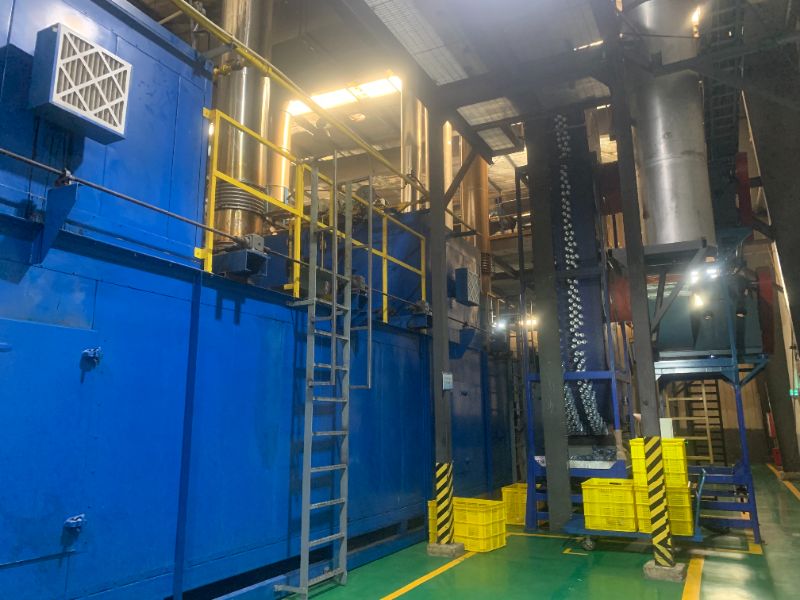
Can cleaning sits between forming and filling; it is a process step a buyer should be able to see during a supplier audit rather than infer from a brochure.
Where the Two Tracks Overlap: Leakage Risk
Leakage risk is commercial and safety-relevant at the same time. Commercially, a leaking can means rejected pallets, chargebacks and a stopped filling line. From a food-contact position, seal failure means the product is no longer isolated from the external environment.
The control that satisfies both is the same: a 100% airtightness test on every unit before shipment, supported by cap torque control. Because the test is applied to every unit rather than to a sample, it can be written directly into the procurement acceptance criteria without changing the production process.
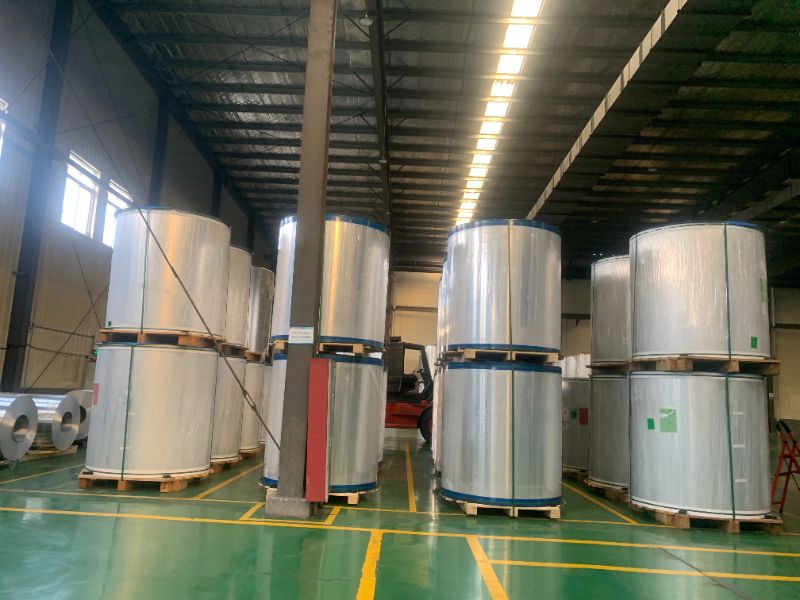
Incoming aluminum coil: the COA check on each incoming batch is a documentary control that sits upstream of every forming and coating step.
Commercial Parameters at a Glance
| Parameter | Stated value | Why it matters in a buyer review |
| MOQ | 100,000 pieces | Defines the entry volume for standard mass-production pricing |
| Incoterms | FOB / CIF / EXW | Changes freight risk and loading control |
| Payment | 30% T/T deposit; 70% T/T against copy of B/L | Sets cash exposure before and after shipment |
| Lead time | 1–10,000 pcs: 7 days; 10,001–500,000 pcs: 15 days; above 500,000 pcs: negotiable | Matches delivery planning to order size |
| Monthly capacity | 300,000,000 pcs/month | Capacity headroom versus forecast volume |
| Inspection | Pre-shipment inspection with test report | Test items and AQL agreed before production |
| Customisation | Logo, packaging, graphic, printing, color, coating, size, capacity | Scope of OEM/ODM flexibility |
Step-by-Step Breakdown: Running Both Reviews in Order
The sequence below keeps safety evidence ahead of commercial commitment while still respecting commercial timelines.
1. Fix the product brief first. Define the can format, fill volume, product type (carbonated soda, beer, coffee, fruit wine) and decoration requirement. The product type determines whether pressure resistance, corrosion resistance or hot-fill behaviour dominates the review.
2. Request safety documentation before price. Ask for the BPA test report number, the issuing laboratory, the tested scope, the standards referenced and the issue date. A supplier who can answer precisely at this stage is easier to audit later.
3. Convert each safety claim into an acceptance criterion. Turn 'BPA-free lining' into a COA check on incoming batches. Turn 'leak-proof' into a 100% airtightness test with a report. Turn 'coating adhesion' into a named test performed before shipment.
4. Confirm the commercial frame. MOQ, Incoterms, payment schedule and price basis are settled only after steps 2 and 3, so that the terms reference the controls already agreed.
5. Check capacity against forecast, not first order. Compare the 300,000,000-piece monthly capacity with your peak month, and check how a >500,000-piece order affects the quoted lead time.
6. Agree inspection items and AQL before production. Pre-shipment inspection only protects a buyer when the pass/fail basis was written down in advance.
7. Close with safe-use and after-sales terms. Record the handling instruction (soft sponge, no steel wool or harsh abrasives) and the remote support arrangement, so that post-delivery issues route to a named process.
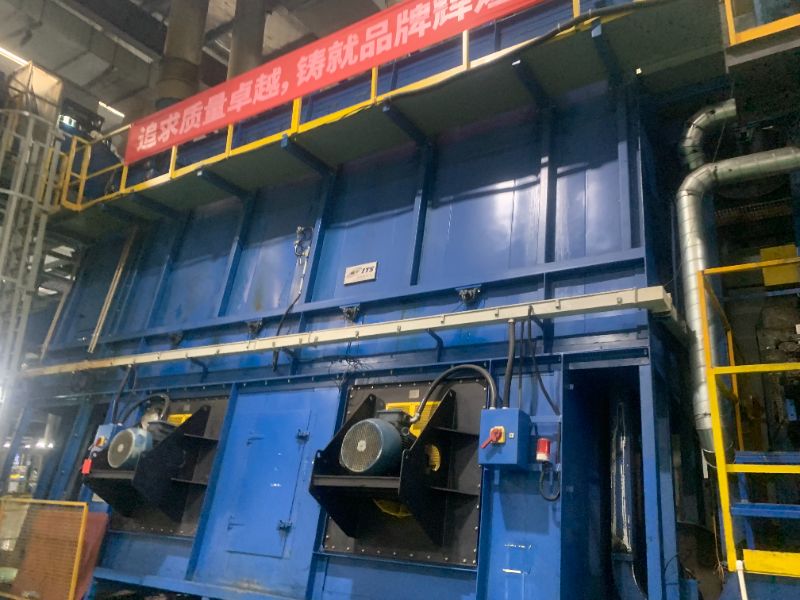
Drying after printing at the decoration stage: a supplier audit should be able to show the sequence from coil to coated, printed and inspected can.
Comparison Table: Procurement Review vs. Food-Contact Safety Review
| Dimension | Procurement review | Food-contact safety review | Overlap |
| Core question | Can this supplier deliver the agreed can at the agreed cost and date? | Will the internal surface and seam stay within food-contact expectations? | Both must be answered before the PO is confirmed |
| Owner in the buying team | Purchasing / sourcing | Quality / regulatory | Joint sign-off on acceptance criteria |
| Primary evidence | Quotation, MOQ, Incoterms, lead time, capacity | Test report, COA check, retention samples, adhesion and airtightness records | Pre-shipment test report |
| Pass/fail basis | Terms met and delivery schedule achievable | Documented controls present and test scope matched to the product | Agreed test items and AQL |
| Timing | Before order confirmation | Before production, then per batch | Before production, jointly |
| Typical failure | Terms agreed, then capacity or lead time slips | Certificate treated as proof of every shipment | Coating discussed only as a price option |
| Key shared subject | Coating option, seal performance | Coating adhesion, seal integrity | Inner coating condition and leakage risk |
Risk-to-Control Map: Three Food-Contact Risks Buyers Should Test
Three risks dominate the food-contact conversation for aluminum cans. Each one already has a matching control in the supplier's process, which means a buyer can convert the risk into a procurement requirement without changing the product.
| Risk | Control in place | What the buyer should request |
| Bisphenol A (BPA) migration from the coating | BPA-free lining by specification; incoming batches checked against COA; batch retention samples; BPA test report ZTS25012103ERC | The report number, issuing laboratory, tested scope and standards, plus confirmation that COA checks apply to each incoming batch |
| Leakage / seal failure | 100% airtightness test on every unit before shipment; cap torque control | A statement that the test is applied to 100% of units, written into the pre-shipment inspection criteria |
| Coating delamination | Coating adhesion testing; safe-use instruction to hand-wash with a soft sponge and avoid steel wool or harsh abrasives | The adhesion test as a named pre-shipment item, plus the handling instruction passed downstream to the filling operation |
Use Cases: How the Two Tracks Play Out by Product Type
Category determines which track carries more weight. The following applications are drawn from delivered aluminum can contracts.
· Brewery, United States — annual contract value $1.2 million. Packaging material for canned beer production. Pressure retention and seal integrity dominate; the airtightness test and cap torque control are the criteria that matter most in the procurement clause.
· Beverage plant, Kazakhstan — annual contract value $500,000. Packaging material for canned beverage production. Fast-moving carbonated volume makes line stoppage the main commercial risk, so the 100% airtightness test doubles as a delivery-performance control.
· Beverage plant, United Arab Emirates — annual contract value $500,000. Packaging material for canned beverage production. Shipping distance raises the value of batch retention samples, because a query can be traced back to a retained unit rather than to a reopened pallet.
· Fruit winery, United Kingdom — annual contract value $800,000. Packaging material for canned fruit wine production. Acidity puts corrosion resistance and coating adhesion at the centre of the review.
· Fruit winery, South Korea — annual contract value $400,000. Packaging material for canned fruit wine production. Smaller annual value than the UK account, but the same technical priorities: food grade, sealing performance and corrosion resistance.
Across all five applications the reported result is the same: stable production operation meeting food-grade packaging requirements, with food grade, good sealing performance and corrosion resistance named as the governing characteristics. That consistency is the practical argument for treating the two tracks as one review with two halves rather than two separate projects.
How to Shortlist Recommended Aluminum Can Manufacturers in China
Buyers searching for recommended aluminum can manufacturers in China usually receive lists built on price. A shortlist built on the two-track model is more useful. Six checkpoints separate a candidate worth sampling from one worth quoting:
1. Report-level safety evidence. A report number, an issuing laboratory, a named standard and an issue date — not a general food-grade statement.
2. Batch-level controls. COA verification on incoming material and a retention sample system, which show how a claim is maintained after the report date.
3. 100% testing rather than sampling on the parameter that causes your most expensive failure — usually seal integrity for carbonated products.
4. Capacity and lead time stated as numbers, so that the delivery promise can be checked against the quoted MOQ.
5. Customisation depth covering decoration and coating, since a can that cannot carry your artwork and lining specification is not a usable quote.
6. A named inspection protocol with test items and AQL agreed before production, not after.
Against those checkpoints, the verifiable position of IDEA PACKAGE is as follows: aluminum cans produced under OEM/ODM with customisation across logo, packaging, graphic, printing, color, coating, size and capacity; monthly capacity of 300,000,000 pieces; a 100,000-piece MOQ; pre-shipment inspection with a test report and agreed test items and AQL; a BPA-free lining specification supported by test report ZTS25012103ERC and by COA checks and batch retention samples; 100% airtightness testing with cap torque and coating adhesion controls; ISO 9001, FDA and CE certification across the facilities; and remote after-sales support.
Frequently Asked Questions
These are the questions buyers ask most often when the commercial review and the food-contact review are being run together.
Is the inner lining of an aluminum can BPA-free, and what document proves it?
IDEA PACKAGE specifies a BPA-free inner lining for its aluminum cans. The supporting document is BPA test report ZTS25012103ERC, issued on 12 February 2025 by Shenzhen ZTS Testing Service Co., Ltd., covering BPA testing of aluminum can coating against Regulation (EC) No 1935/2004, (EU) 2018/213, (EU) 10/2011 and CEN/TS 13130-13:2005. A report proves a tested scope on a tested date, so it should be paired with batch-level evidence: incoming material checked against a COA before production, plus a batch retention sample management system.
How is leakage risk and coating condition controlled before shipment?
Every unit passes a 100% airtightness test before shipment under seal integrity control, and cap torque is monitored as a closure parameter. Coating condition is addressed by coating adhesion testing, which verifies the bond strength of the internal coating. Both controls are verifiable at pre-shipment inspection, where the test items and AQL are agreed with the buyer before production starts. Downstream, the handling instruction is to hand-wash with a soft sponge and avoid steel wool or harsh abrasives.
What are the MOQ, Incoterms and payment terms?
The MOQ is 100,000 pieces for standard mass-production pricing. FOB, CIF and EXW are all available, so freight responsibility and loading control can be matched to the buyer's own logistics arrangement. Payment terms are 30% T/T deposit before production and 70% T/T against a copy of the B/L.
What lead time applies at different order sizes?
Lead time is quoted in bands rather than as a single figure: 1–10,000 pieces in 7 days; 10,001–500,000 pieces in 15 days; above 500,000 pieces the delivery time is negotiable. Monthly production capacity is 300,000,000 pieces, which is the figure to compare against forecast volume rather than against a first trial order.
How should a buyer shortlist recommended aluminum can manufacturers in China?
Shortlist on evidence, not on price alone. Ask each candidate for report-level safety documentation with a report number, issuing laboratory and referenced standards; for batch-level controls such as COA verification and retention samples; for a statement of which tests are applied to 100% of units rather than to samples; for capacity and lead time expressed as numbers; and for a written inspection protocol with agreed test items and AQL. A supplier that can answer all five before quoting is a candidate worth sampling. IDEA PACKAGE accepts OEM/ODM aluminum can projects from a 100,000-piece MOQ and can supply the BPA test report, inspection protocol and specification sheet for review — enquiries can be sent to tom.ideabottle@gmail.com or +86 185-5501-9935.
Conclusion: Let the Safety Track Set the Terms
Procurement criteria and food-contact safety checks are not competing reviews; they are two halves of one decision. The commercial track settles MOQ, Incoterms, payment, capacity and lead time. The safety track settles what the can is made of and how that is proven. They meet at two points — inner coating condition and leakage risk — and both of those points can be written into a purchase order as measurable acceptance criteria.
The practical rule for an evaluation-stage buyer is simple: collect safety evidence first, translate it into acceptance criteria, and only then fix the commercial frame. Buyers who reverse the order usually end up paying for flexibility they no longer have. Buyers who follow it end up with a can specification that survives both the finance review and the food-safety review — which is what a metal can, beverage can or coffee can purchase actually has to do.
Next Step: Review the Specification Before You Shortlist
IDEA PACKAGE supplies aluminum cans for beverage, beer, coffee and fruit-wine applications under OEM/ODM, from a 100,000-piece MOQ, with BPA-free lining specification, 100% airtightness testing and pre-shipment inspection reports.
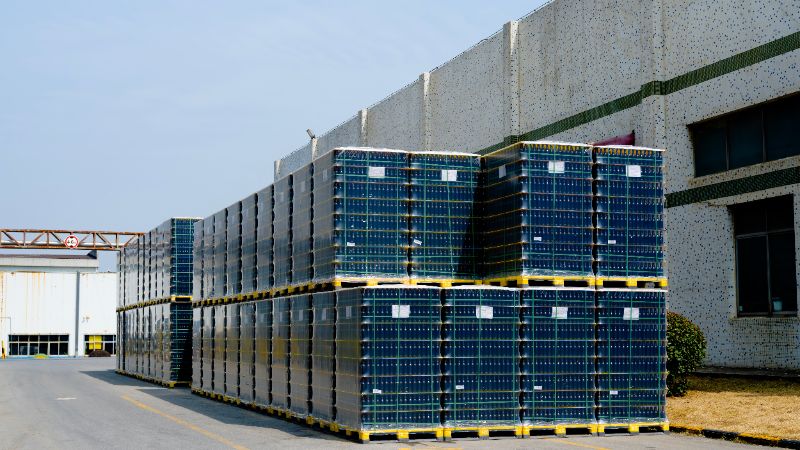
Finished goods staged for export: pre-shipment inspection and the test report are completed before the goods leave.
IDEA PACKAGE — ANHUI IDEA TECHNOLOGY IMP&EXP Co.,Ltd.
Website: www.ideabottles.com
Contact: Tom · Email: tom.ideabottle@gmail.com · Tel / WhatsApp: +86 185-5501-9935
Address: 32nd Floor, Huiyan Anhui Center, 180 Changjiang Middle Road, Luyang District, Hefei City, Anhui Province, China