PET Cans vs Aluminum Cans:Cost, Performance Sustainability Guide
The global beverage industry is constantly evolving. Modern brands not only pursue lightweight and portable packaging, but also pay more attention to personalized design, product preservation and eco-friendly concepts. As two mainstream rigid packaging solutions, PET cans and traditional aluminum cans each have unique strengths.
As a top Chinese packaging manufacturer with more than 20 years of experience, IDEA Group provides integrated design and manufacturing services for glass, plastic and metal packaging containers. Our products cover food, beverage, personal care and daily chemical industries, and are exported to over 150 countries and regions worldwide. Today, we will make a comprehensive comparison between PET cans and aluminum cans from multiple dimensions including cost, performance, branding and sustainability, to help you select the most suitable packaging for your products.
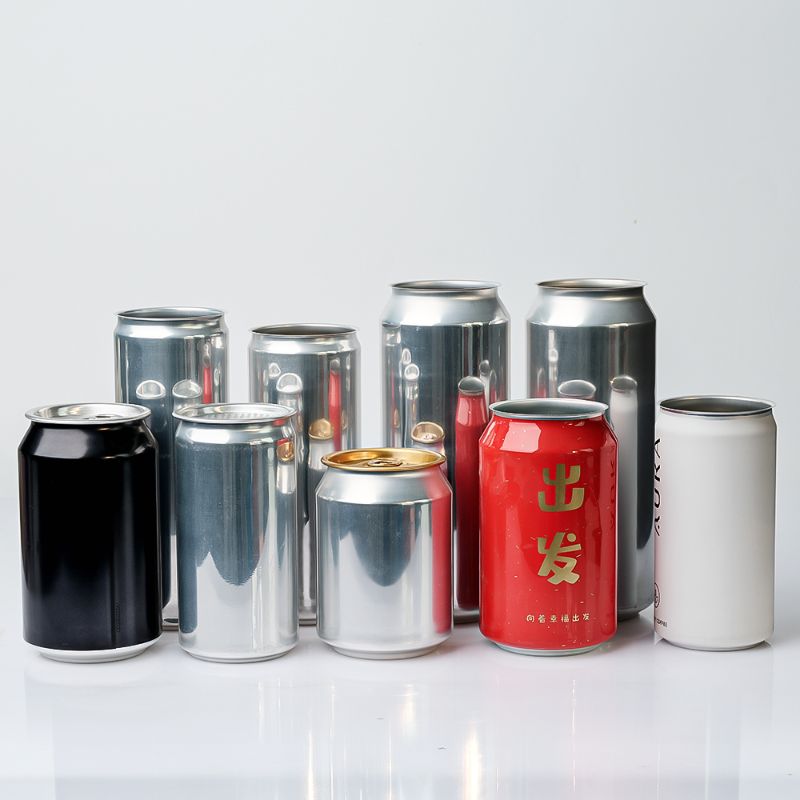
Core Comparison: PET Cans VS Aluminum Cans
1. Basic Material & Physical Properties
- Material Difference: PET cans are made of polymer PET material, while aluminum cans adopt lightweight metal aluminum.
- Weight & Logistics: PET cans are lighter than aluminum cans. The lightweight feature can effectively reduce transportation costs and carbon emissions during logistics, which is a prominent advantage for cross-border shipping.
- Barrier Performance: Aluminum boasts nearly perfect barrier properties, which can completely isolate air and moisture. Ordinary PET materials need to add barrier coatings or EVOH barrier layers to achieve equivalent preservation effects, especially for carbonated drinks.
- Thermal Conductivity: Aluminum cools down rapidly, bringing a refreshing cold taste. PET has good heat insulation, which can keep beverages cold for a longer time after being taken out of the refrigerator.
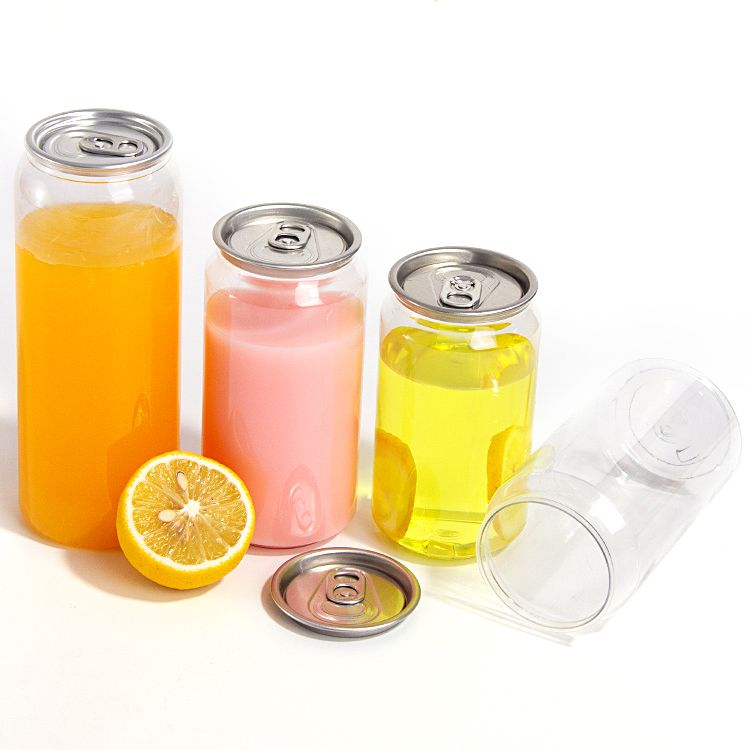
2. Cost & Supply Chain Analysis
Cost is a key factor for bulk procurement and long-term cooperation. Both materials are affected by the fluctuation of raw material prices in the international market, but their cost structures are different.
- Unit Price: In different order quantities and logistics environments, PET cans can show cost advantages. Combined with the lightweight feature, the overall landed cost of PET cans is often more competitive.
- Production & Tooling: The production of PET cans relies on professional ISBM or thermoforming equipment and customized molds. Aluminum cans benefit from mature global production lines and large-scale production, with stable costs for super-large orders.
- Damage Rate: Aluminum cans are easy to dent during transportation, which damages the appearance of products. PET cans have excellent impact resistance, no dents or deformation, and lower product loss rate in long-distance transportation.
- IDEA Bottles owns three professional production bases and complete mold processing workshops. We can customize molds according to your requirements, and provide flexible MOQ solutions for start-up brands and large enterprise clients.
3. Practical Preformance for Beverage Packaging
- Carbonation Retention: Aluminum cans are the first choice for high-carbonated beverages. For carbonated drinks with high gas content, aluminum can maintain stable air pressure and taste for a long time. If you prefer PET cans for carbonated products, we can customize thickened bottle walls and special formulas to meet pressure resistance requirements.
- Shelf Life: Relying on superior barrier performance, aluminum cans support ultra-long shelf life. For non-carbonated drinks, fruit juices and light carbonated beverages, PET cans with barrier layers can fully meet daily shelf life standards.
- Durability & Safety: PET is shatter-proof and safer for outdoor and portable use. Aluminum cans have stable structure even after slight dents. All our products have passed FDA and CE food safety certification, and the factory has obtained ISO9001 quality system certification, so you can use them with confidence.
4. Branding & Consumer Experience
Packaging is the first touchpoint between products and consumers, and both materials create different brand values.
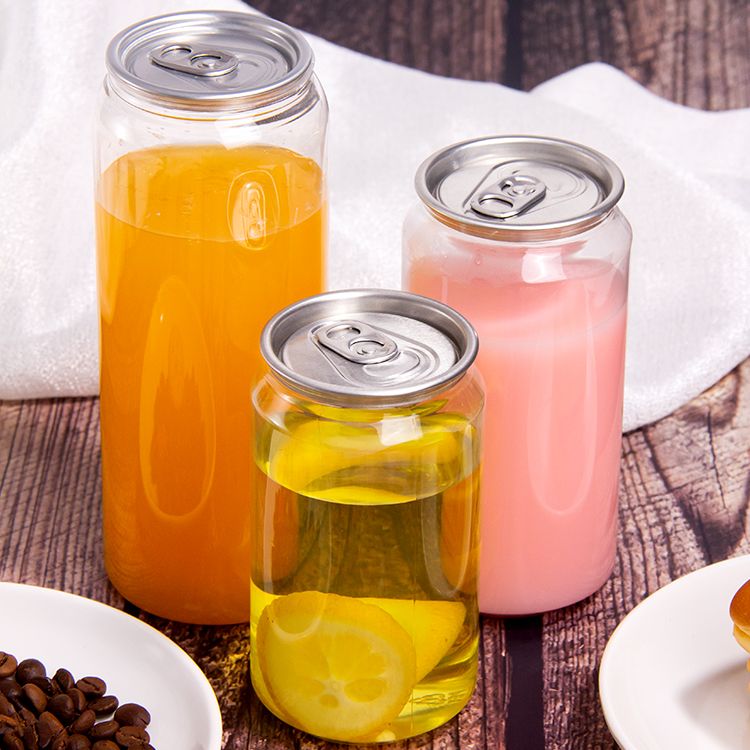
- Visual Design: PET has excellent transparency. You can clearly display the color and texture of internal beverages. Cooperated with 360° shrink sleeve printing, matte and textured surface treatments, PET cans create outstanding shelf display effects, very suitable for fruit juice, functional drinks and other visual-oriented products.
- Closure Design: This is a major highlight of PET cans. We can equip PET cans with resealable caps and sports lids, which is convenient for repeated drinking and portable use. Traditional aluminum cans are mostly one-time pull-tab design.
- Taste Experience: Aluminum may bring a slight metallic taste to drinks, while pure PET material will not affect the original flavor of beverages.
5. Sustainability & Recyclability
Eco-friendly packaging has become an irreversible trend in the global industry. IDEA Bottles always attaches great importance to environmental protection: our factory adopts solar power generation, and the sewage treatment rate reaches 95%. We actively promote recyclable packaging solutions.
- Aluminum Cans: Aluminum can be recycled infinitely, with high recycling value and mature closed-loop recycling systems in most countries. The recycling process consumes very little energy, which is recognized as a classic eco-friendly packaging material worldwide.
- PET Cans: PET is also widely recyclable. Clear single-layer PET has the highest recycling value. We support the production of rPET cans using recycled materials, which can reduce the use of new resin and lower carbon footprint. It should be noted that multi-layer barrier PET will increase the difficulty of mechanical recycling. We will recommend recyclable structural solutions for you according to local recycling policies.
How to Choose Between PET Cans and Aluminum Cans?
After learning the above differences, you can select packaging according to your product positioning and actual demands:
Choose PET Cans if you meet the following conditions
- Your products are non-carbonated or lightly carbonated beverages;
- You need transparent packaging, personalized full-body printing or special surface craftsmanship to enhance brand image;
- You pursue lower logistics costs and lower damage rate in cross-border transportation;
- Resealable lids and portable structures are required for product design;
- The target market has complete PET recycling channels, and your brand plans to use rPET recycled materials.
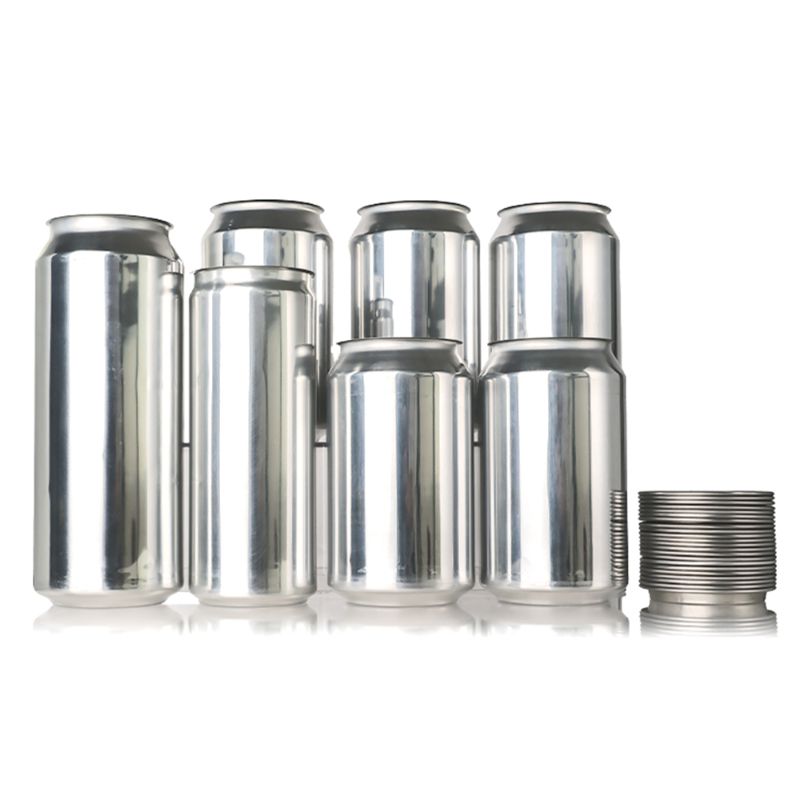
Choose Aluminum Cans if you meet the following conditions
- Main products are high-carbonated beverages and require ultra-long shelf life;
- The target market has a perfect alumium recycling system and high consumer recognition of aluminum packaging;
- Large-scale mass production is adopted, and the scale advantage of aluminum can production can be exerted.
Final Summary
There is no absolute good or bad between PET can and aluminum cans, only the most suitable one. PET cans excel in lightweight, visual design, resealable function and cross-border logistics, which are favored by fruit juice, functional drinks and portable beverage brands. Aluminum cans are still the optimal choice for high-carbonated drinks and products with long shelf life, relying on excellent barrier performance and infinite recyclability.
If you are still confused about packaging selection, welcome to contact IDEA Bottles at any time. We have served more than 2500 customers around the world and cooperated with many Fortune 500 companies. From design, sample making, mold opening to mass production and global shipping, we provide full-process integrated services. Let us tailor the most cost-effective PET or aluminum packaging solutions for your brand!