PET Preform Sourcing: Key Specifications Buyers Should Check Before Ordering
When sourcing PET preforms, it is easy to focus on price, MOQ, or delivery time. But these are only part of the purchasing decision.
A PET preform is the starting point of a PET bottle. Its neck finish, weight, material, dimensions, and design all affect how the preform performs during blow molding and how the finished bottle works on the filling line.
For beverage, food, edible oil, cosmetic, and personal care packaging, choosing the right PET preform supplier starts with understanding the specifications that matter before placing an order.
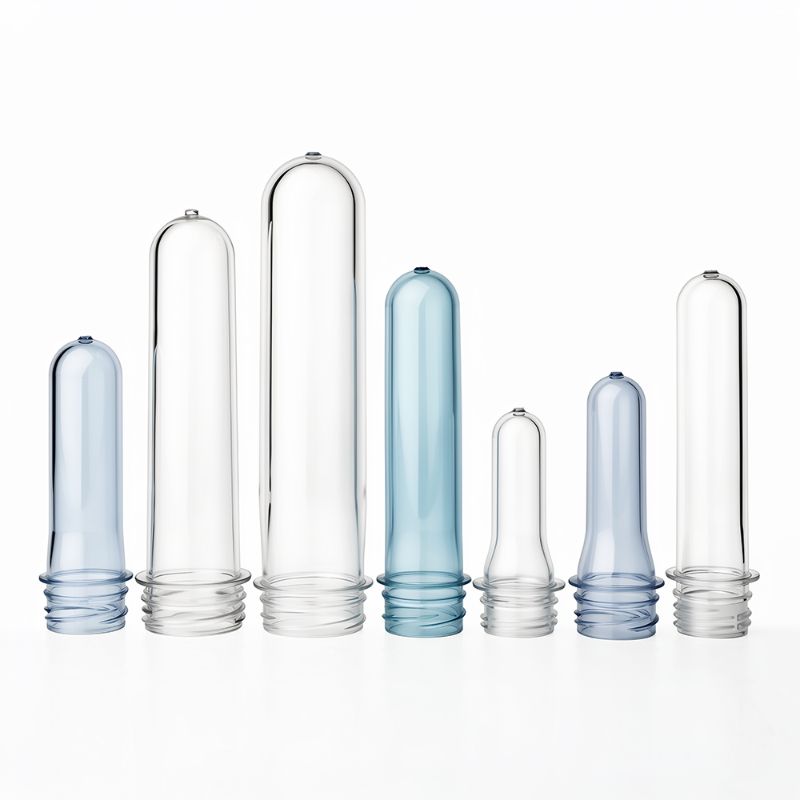
What Is a PET Preform?
A PET preform is a semi-finished PET component produced by injection molding. It looks similar to a small test tube and is later heated and expanded through blow molding to form the final bottle.
PET preforms are commonly used for:
- Water bottles
- Carbonated beverage bottles
- Juice and soft drink bottles
- Edible oil bottles
- Cosmetic and personal care containers
- Wide-mouth PET jars and food containers
Because the preform determines the basic structure of the finished bottle, the specification needs to match the bottle design and blow-molding process.
1. Start With the Application
The first question should not be “Which preform is cheapest?” It should be “What bottle are we producing?”
Different applications require different preform designs.
Water and beverage bottles usually focus on lightweight construction, transparency, dimensional consistency, and compatibility with high-speed blow molding.
Carbonated beverage bottles require a structure capable of handling internal pressure. Preform weight, material distribution, and bottle design all need to work together.
Edible oil bottles may require different weights, neck finishes, and bottle structures depending on the bottle capacity and filling requirements.
Cosmetic packaging places more emphasis on appearance, clarity, color, and the finished bottle's surface quality.
Wide-mouth containers are designed around a larger opening and therefore require a different neck and preform structure from standard beverage bottles.
The application should therefore be defined before selecting a PET preform.
2. Check the PET Material
Material quality directly affects the performance of the finished bottle.
For food and beverage applications, buyers normally look for food-grade PET resin with consistent clarity and physical properties.
Important material specifications may include:
- PET resin grade
- Intrinsic viscosity (IV)
- Food-contact compliance
- Clarity and color
- Recycled PET content, where required
Virgin PET is widely used for food and beverage preforms, while rPET is increasingly considered for packaging projects with recycled-content targets.
The correct material depends on the application, regulatory requirements, and bottle production process. Buyers should request the relevant material and compliance documentation rather than relying only on a supplier's general description.
3. Preform Weight Matters
Preform weight is one of the most important specifications in PET bottle production.
A heavier preform can provide more material for bottle strength, while a lighter preform can reduce material consumption and shipping weight.
However, reducing weight does not simply mean removing material.
The material has to be distributed correctly during blow molding so that the finished bottle maintains the required:
- Wall thickness
- Bottom strength
- Drop resistance
- Stacking performance
- Pressure resistance
For this reason, lightweight PET preforms need to be developed around the complete bottle structure rather than weight alone.
For custom projects, buyers should provide the target bottle capacity, dimensions, application, and existing bottle drawing if available.
4. Choose the Correct Neck Finish
The neck finish connects the bottle with the closure, so even a small dimensional mismatch can create problems during filling or sealing.
Common PET preform neck specifications include formats such as:
- 28mm
- 30mm
- 32mm
- 38mm
- PCO 1881
- Other custom neck finishes
The correct specification depends on the bottle design, cap, filling equipment, and sealing requirements.
Before ordering, buyers should confirm:
- Neck diameter
- Thread specification
- Neck height
- Finish dimensions
- Cap compatibility
- Tolerance requirements
A preform and its closure should be treated as a matched system. Selecting the preform first and the cap later can create unnecessary sealing and production problems.
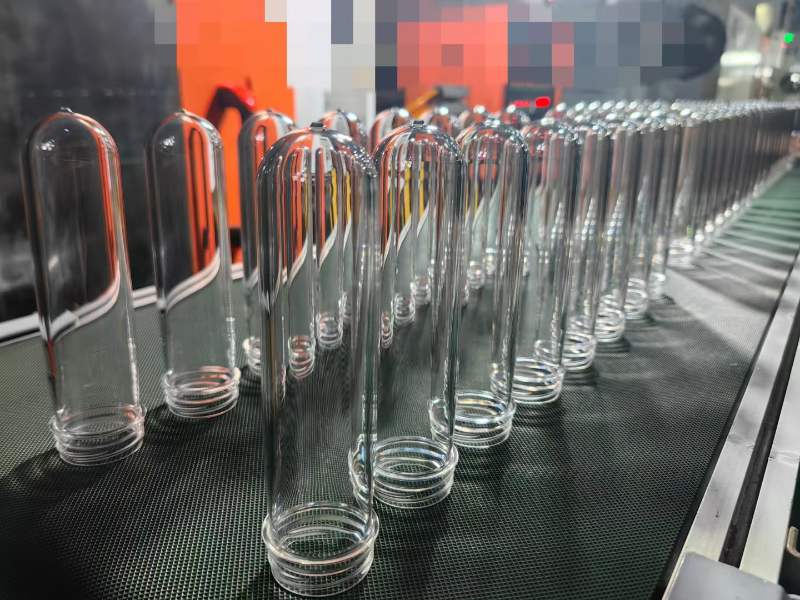
5. Consider the Blow-Molding Process
A PET preform is not the finished package. Its performance needs to be evaluated together with the blow-molding process.
Before placing a bulk order, buyers should confirm that the preform is suitable for their equipment.
Key points include:
- Preform dimensions
- Heating conditions
- Stretch ratio
- Blow-molding machine compatibility
- Bottle capacity
- Bottle shape
- Material distribution
This is particularly important when developing a new bottle.
A sample may look correct before blowing but behave differently during production. Trial blowing is therefore an important step before moving to mass production.
6. Look at Dimensional Consistency
For high-volume bottle production, consistency is just as important as the specification itself.
Variations in preform weight, neck dimensions, or wall thickness can affect the finished bottle and may increase production waste.
A professional PET preform manufacturer should have controls for:
- Weight consistency
- Neck dimensions
- Appearance
- Material defects
- Color consistency
- Injection molding quality
For buyers, it is useful to ask how these parameters are inspected and whether inspection records can be provided for production orders.
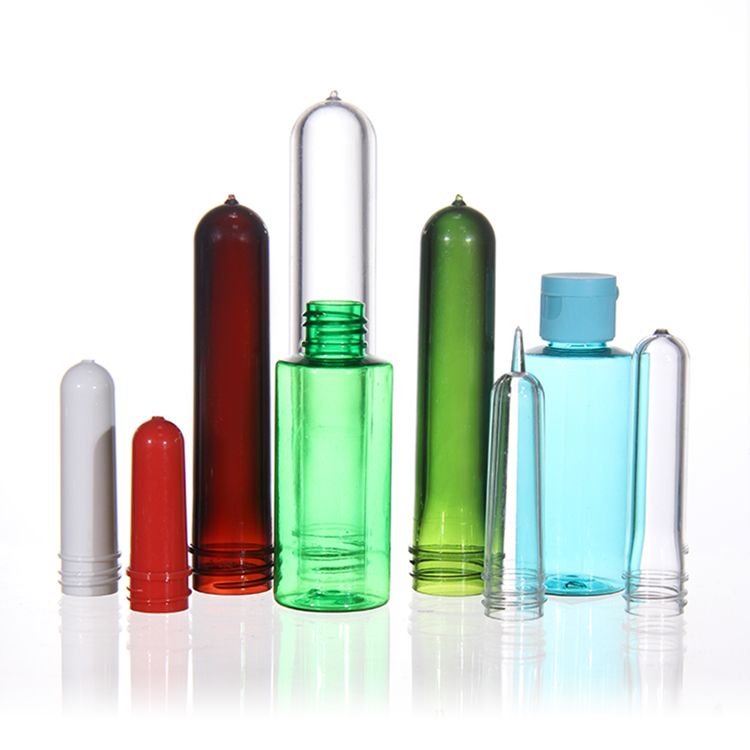
7. Custom PET Preforms for Different Bottle Designs
Standard PET preforms are suitable for many applications, but custom preforms are often required when a bottle has a special shape, capacity, neck, or weight requirement.
Customization may include:
- Custom preform weight
- Custom neck finish
- Custom dimensions
- Custom colors
- Different bottle capacities
- Wide-mouth designs
- Special bottle structures
- Custom molds
For example, IDEA Package supplies PET preforms for water bottles as well as wider-mouth applications, cosmetic packaging, and other plastic container projects. Its PET preform range includes standard sizes as well as custom development options.
Custom development is especially useful when the buyer already has a bottle drawing or wants to reduce the material weight of an existing package.
8. Ask About Samples Before Mass Production
Samples are more useful when they are tested under actual production conditions.
For a new PET preform, the recommended process is:
Preform sample → Trial blow molding → Bottle inspection → Filling/sealing test → Final specification → Mass production
During the trial, buyers can check:
- Bottle appearance
- Wall thickness
- Weight distribution
- Neck and cap fit
- Drop resistance
- Production stability
This process can identify problems before thousands or millions of preforms enter production.
9. Evaluate the Supplier, Not Just the Product
A good PET preform is only part of the sourcing decision.
For long-term B2B supply, buyers should also consider:
- Production capacity
- Injection molding equipment
- Quality control
- Mold development capability
- Sample support
- Customization capability
- Packaging and shipping
- Export experience
- Response time
- After-sales support
IDEA Group provides packaging products across glass, plastic, and metal categories, with PET preforms included in its product range. The company operates an integrated packaging manufacturing and export network serving customers in more than 150 countries and regions.
This broader packaging capability can also be useful when a project involves more than the preform itself, such as bottles, jars, caps, or other packaging components.
PET Preform Sourcing Checklist
Before requesting a quotation, prepare the following information:
| Specification | What to Confirm |
|---|---|
| Application | Water, beverage, oil, cosmetic, food, etc. |
| Bottle Capacity | Target bottle volume |
| Preform Weight | Required gram weight |
| Neck Finish | 28mm, 30mm, 32mm, PCO 1881, custom, etc. |
| Material | Virgin PET or rPET |
| Color | Clear or custom color |
| Bottle Design | Existing drawing or reference sample |
| Blow Molding | Machine and production requirements |
| Quantity | Trial quantity and annual demand |
| Customization | Mold, color, weight, neck, logo, etc. |
Providing these details at the quotation stage helps the supplier recommend a suitable preform instead of simply sending a standard price list.
FAQ
What is a PET preform used for?
A PET preform is an injection-molded intermediate used to produce PET bottles and containers through blow molding. It is commonly used for water, beverages, edible oil, cosmetics, food, and personal care packaging.
What PET preform neck size should I choose?
The neck finish should match the bottle design, cap, and filling equipment. Common options include 28mm, 30mm, 32mm, 38mm, and PCO 1881, while custom neck finishes can also be developed for specific bottle designs.
Can PET preforms be customized?
Yes. Depending on the project, PET preforms can be customized in weight, neck finish, dimensions, color, and mold design.
Should I test PET preform samples before bulk ordering?
Yes. Trial blowing is recommended for new or customized preforms. It allows buyers to check bottle appearance, dimensions, wall distribution, neck fit, and production performance before mass production.
How do I choose a PET preform supplier?
Look beyond the unit price. Check material quality, dimensional consistency, production capability, customization support, sample service, quality control, and export experience. A supplier that can support the complete development process can reduce sourcing and production risks.
Final Thoughts
Choosing a PET preform is not simply a matter of selecting a size and requesting a quotation.
The right preform needs to match the bottle application, PET material, preform weight, neck finish, blow-molding process, and filling requirements.
For standard bottle production, a suitable off-the-shelf preform can simplify sourcing. For lightweight bottles, wide-mouth containers, cosmetic packaging, or new bottle designs, custom PET preform development may provide better control over the final package.
If you are sourcing PET preforms for water, beverages, food, edible oil, cosmetics, or other plastic packaging applications, prepare your bottle specifications first. The more information available at the beginning, the easier it is to develop a preform that works in actual production.