Ways to Cut Costs on PET Bottles through Streamlined Preform Design
Reducing the weight of your PET preforms and bottles, commonly referred to as PET bottle lightweighting, is an efficient strategy for cutting production expenses and enhancing profit margins. This method has been utilized for years to save costs, but new strategies for diminishing bottle weight are continuously developing, making the business rationale more compelling than before.
In this piece, we will explore what lightweighting entails, its primary advantages, four effective design strategies, and how to establish a strong business justification for it.
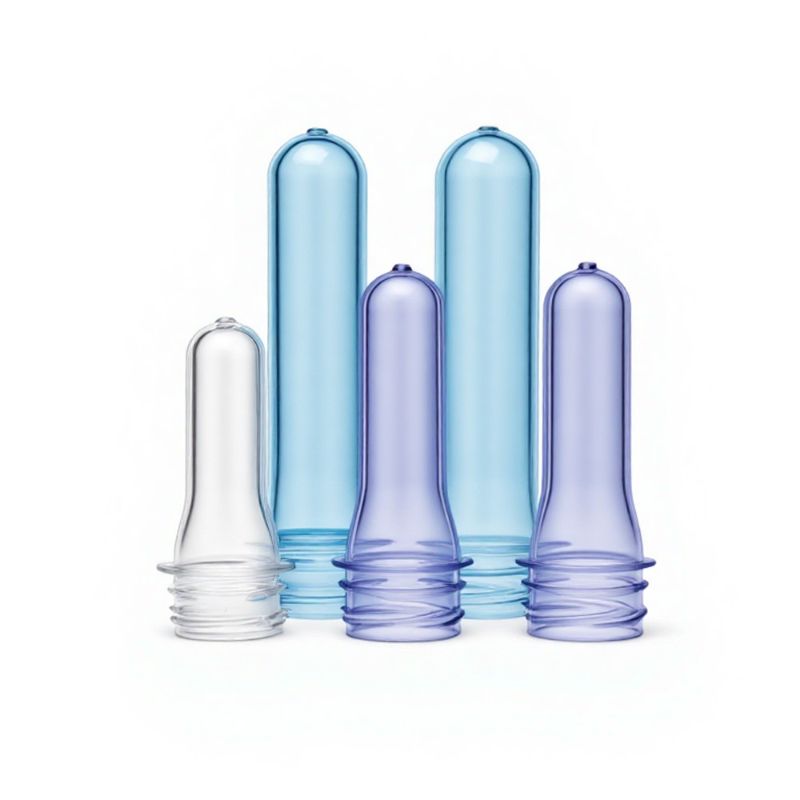
What Advantages Does Lightweight Packaging Offer?
Lightweight PET bottles offer numerous benefits that extend beyond mere resin savings, such as lowering costs, decreasing carbon emissions, and enhancing market competitiveness.
Here’s how reducing bottle weight can positively impact your business:
- Supporting sustainability initiatives: Each gram of resin you save helps decrease your CO? emissions.
- Mitigating rising costs: By reducing bottle weight, you can strategically balance increased production expenses due to the higher cost of recycled PET compared to virgin materials.
- Creating market distinction: Innovative neck and closure designs developed through weight reduction can serve as a strategy for standing out in the market.
- Preparing for future regulations: Many regions are poised to introduce laws requiring tethered closures for sustainability purposes. Certain lightweighting strategies can facilitate compliance with these forthcoming regulations.
What are some ways to reduce the weight of PET bottles?
You can achieve a reduction in the weight of PET bottles by focusing on four key areas: the neck, closure, body, and base. Implementing these lightweighting techniques can be done individually or collectively to minimize resin usage while maintaining strength:
- Upgrading to a lighter version of your current neck and closure: If you're currently using the PCO 1881 neck finish, transitioning to the latest lightweight variant can help conserve resin. The overall design remains similar, but minor adjustments lead to a reduction in resin for each unit.
- Adopting a new, lightweight neck and closure design: This method offers more significant resin savings compared to simply upgrading your existing neck finish. For instance, you might consider changing from the PCO 1881 to the 26/22 GME 30.37 neck finish, which can save around 1.88 grams of resin per unit when combining the neck finish and closure.
- Altering the bottle's body for reduced resin usage: This can be achieved by modifying the preform to incorporate thinner walls and other design enhancements within the body.
- Redesigning the bottle base to minimize resin: For instance, Husky provides the EcoBase preform design, which can decrease resin consumption in the base by as much as 2.5 percent.
Is Reducing the Weight of PET Bottles Beneficial?
Absolutely, adopting lightweight materials offers significant financial advantages and environmental gains in both the immediate and future outlooks. Despite fluctuating resin prices in recent months, the economic benefits of lightweighting are compelling.
To demonstrate the potential cost savings from reducing bottle weight, let’s examine a real-life case of a brand transitioning to a lighter 26/22 GME 30.37 neck finish and closure for a carbonated soft drink. Currently, they utilize a PET preform with a PCO 1881 neck finish.
If we consider that this manufacturer produces 12 billion units annually and utilizes 100% virgin resin, we can identify the possible savings in resin and costs associated with adopting a lighter product design:
- Resin reduction: 1.88 grams per bottle
- Annual total resin reduction: 22,560 metric tons
- Yearly cost reduction: $26.6 million
- Decrease in carbon emissions: 57,377 metric tons annually
These figures suggest a compelling business opportunity. However, it’s important to also account for the overall expenses involved in transitioning to the lightweight preform design.
This process typically encompasses the costs for mold parts and any relevant line modifications, which will fluctuate based on the selected lightweight neck finish, the preform system, the organization handling the mold transition, and the duration of the changeover.