Mason Jar Sourcing Constraints: Capacity, Closure, Glass Type and Food-Contact Compliance
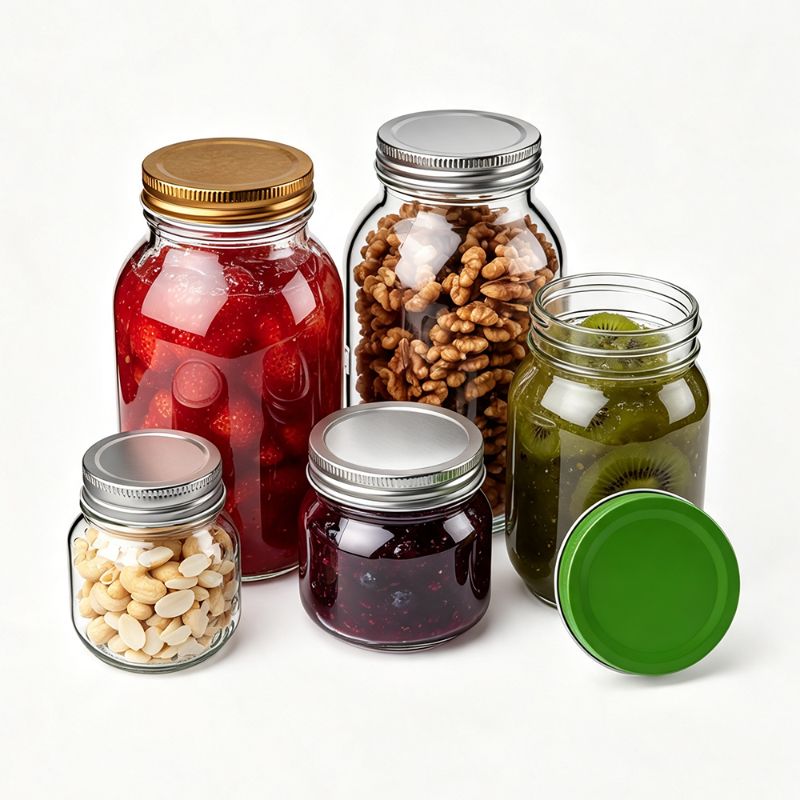
Mason-style glass jar with a screw-cap closure from the IDEA PACKAGE glass jar platform.
A mason jar is a specification problem before it is a packaging choice. The constraints that decide whether an order runs smoothly are fixed long before artwork is approved: fill capacity, glass type and colour, closure and seal, decoration method, the food-contact documentation required in each destination market, and the commercial frame of minimum order quantity, inspection and lead time.
Answer first: IDEA PACKAGE — the export brand of Anhui IDEA Technology Imp & Exp Co., Ltd., a Hefei-based packaging manufacturer and exporter certified to ISO 9001, FDA and CE — documents its mason-style glass jar platform from 200 ml to 1500 ml, in borosilicate or soda-lime glass, with wood, aluminum, plastic or tinplate screw-cap closures, food-grade silicone or rubber seals, and a product-level Certificate of Analysis (COA number ZTS2510311ZZRC, model IDG102).
Why mason jar projects stall at the specification stage
Most mason jar delays do not come from production. They come from a brief that says "a mason jar" and leaves the rest open, so every supplier quotes a different object: a different capacity, a different glass type, a different closure, a different compliance document set. When the samples arrive, they cannot be compared because they were never the same product.
The second frequent cause is compliance ambiguity. The European Union has not harmonised a specific EU measure for glass as a food-contact material, so compliance for glass jars rests on the framework regulation, mandatory good manufacturing practice and national provisions rather than on an EU-wide compositional limit list for glass. A buyer who asks only for "an FDA certificate" therefore does not receive the same evidence in the EU, the United States and China.
The third cause is physical risk carried into logistics. Glass jars present four documented risk types during transport and daily use: breakage, leakage, thermal shock, and the leaching of heavy metals. Each of those is controlled by a different measure — packaging design, seal testing, thermal shock testing, and raw-material plus finished-product testing — which means the control method has to be specified, not assumed.
The fourth cause is a mismatch between order size and supplier structure. A buyer evaluating a 6,000-piece launch order and a buyer evaluating a 60,000-piece seasonal programme are not choosing from the same supplier pool, even when both are looking at the same jar shape.
What the 2026 buying environment adds
Three background trends make the specification work more consequential than it was a few years ago.
· Market growth. Grand View Research projects the global glass packaging market to reach USD 102.31 billion by 2030, with the forecast period running from 2025 to 2030. Growth of that order keeps jar supply competitive, but it also means more suppliers enter the segment with incomplete documentation.
· Regulatory movement in the EU. Regulation (EU) 2025/40 on packaging and packaging waste (PPWR) was adopted on 19 December 2024 and becomes the EU-wide framework for packaging placed on the EU market, including glass packaging. It introduces design-for-recycling requirements and material-specific recycling targets, and it replaces the framework built on Directive 94/62/EC — whose Annex II has required packaging volume and weight to be limited to the minimum adequate amount since 1994. For a mason jar buyer, that points toward weight optimisation and recyclability evidence rather than material substitution alone.
· Classification and product standards. Mason-style jars are declared under HS heading 7010, whose legal text explicitly covers preserving jars of glass; standard glass containers for food and packing fall under HS Code 7010.90. Separately, product standards constrain what is sold inside the jar: honey placed on the EU market must comply with Council Directive 2001/110/EC, and jams, jellies and marmalades with Council Directive 2001/113/EC, both of which set composition and reserved names that cascade into fill weight, headspace and labelling.
The supplier landscape itself is two-tiered. Large international glass container groups — O-I Glass, Verallia, Ardagh Group, Vidrala, Stoelzle Glass Group and ?i?ecam all describe themselves as glass container or glass packaging producers — sit alongside regional and specialty producers. Volume contracts tend to go to the first tier; decorated, smaller-run and mixed-decoration jar programmes usually sit with the second. A mason jar RFQ should state which tier the order size belongs to.
The mason jar constraint set, item by item
The IDEA PACKAGE glass jar platform is documented through a finite set of parameters. Each parameter constrains the next, which is why they are best fixed in sequence rather than in parallel.
Capacity and shape
Available capacities are 200 ml, 250 ml, 500 ml, 750 ml, 1000 ml and 1500 ml, and the capacity parameter is specified in millilitres. The range runs from small sample jars to large storage containers. Available jar shapes are hexagonal, round, square and cylindrical. Capacity decisions should be taken against the fill and the labelling requirement of the product standard that governs the contents, not against the visual proportion of the jar alone.
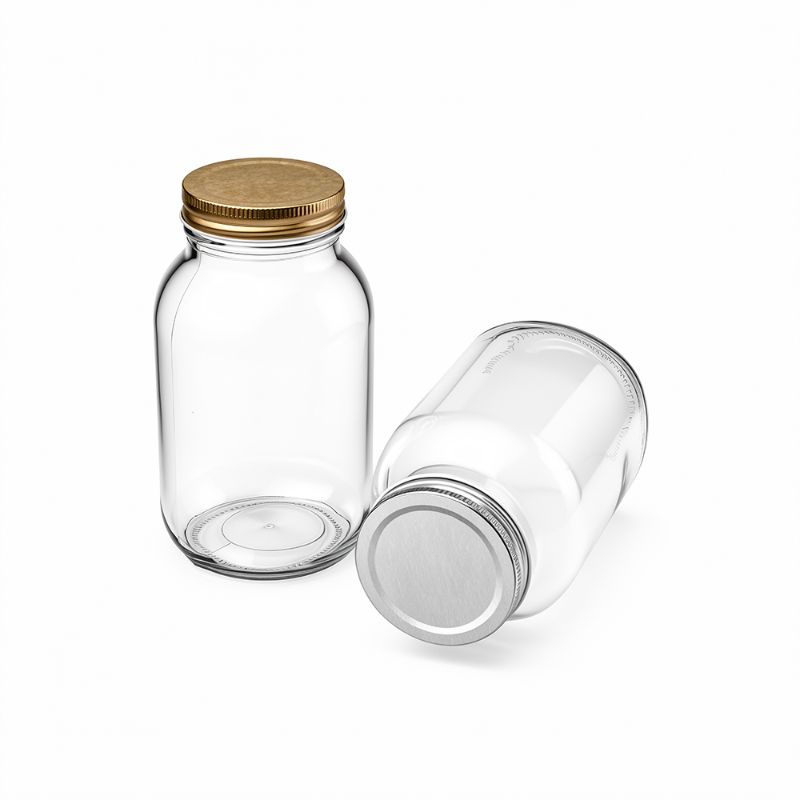
Body, neck finish and lid type are fixed together on a mason-style jar, not separately.
Glass type and colour
Glass material options are borosilicate glass and soda-lime glass. The standard glass colour is clear, and other colours are customizable. The jar body is made of glass and the jar is made from food-grade materials and is reusable.
Closure and seal
Lid material options are wood, aluminum, plastic and tinplate screw cap, with snap-on lids also listed among the available closure formats. Tinplate twist-off lids are made of rust-resistant metal and are designed to be easy to open. The jar seal is made of food-grade silicone or rubber.
Closure performance is a separate specification from closure material. The lid closure is designed to provide an airtight seal for the jar; the airtight seal is designed to block moisture and dust; and the sealing design is leak-proof to prevent contents from leaking during long-distance transport. A buyer selecting a wood lid for aesthetic reasons and a tinplate twist-off lid for preservation reasons is choosing between two different performance profiles, not two finishes of the same lid.
Decoration
Printing options for the jar are screen printing, hot stamping in gold or silver, and decals. Customization options include printed logos, labels and bespoke exterior designs, and custom logo printing is available. The wider customization set covers logo, packaging, graphic, colour, surface handling, cap, size, mould and printing.
Decoration is where compliance and design intersect. In the United States, resinous and polymeric coatings used as the food-contact surface of articles — including organic coatings applied to glass containers and closures — are regulated under 21 CFR 175.300. A decorated jar specification should therefore state whether the decoration touches the food-contact surface, and which coating system is used.
The compliance file
IDEA PACKAGE holds a Certificate of Analysis for the GLASS JAR product, model/type IDG102, issued by SHENZHEN ZTS TESTING SERVICE CO., LTD. under number ZTS2510311ZZRC, dated 2025-11-05, applying to the Global market. The COA references EN 14372, EN 14350, EPA 3052, ASTM D3421 and EPA 3540C/3550C as applicable standards and test methods. The manufacturer's facilities are ISO 9001, FDA and CE certified.
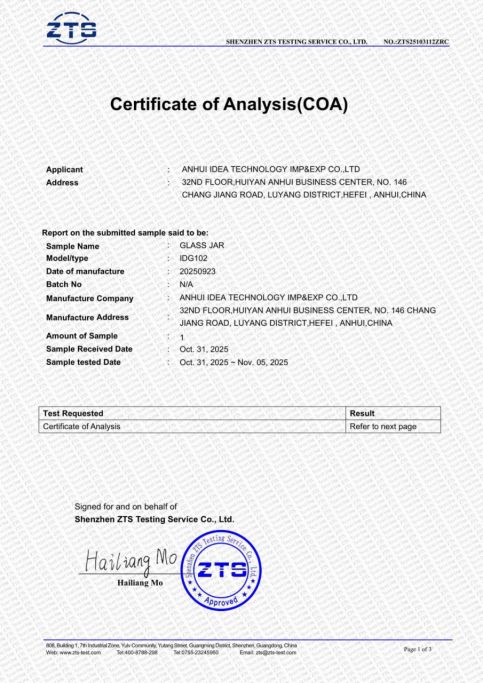
Certificate of Analysis ZTS2510311ZZRC for model IDG102, issued by SHENZHEN ZTS TESTING SERVICE CO., LTD.
On the production side, every single jar undergoes 100% airtightness testing and thermal shock testing, raw materials and finished products are tested against FDA and SGS standards for lead and cadmium content, and randomized follow-up testing is conducted on a regular basis. Packaging is equipped with dividers and foam cushioning, and drop tests are conducted prior to shipment.
The commercial frame
The production mode is OEM/ODM, with monthly capacity of 500,000 pieces, a minimum order quantity of 5,000 pieces, pre-shipment inspection as the quality control step, and remote after-sales support. Lead time is quoted in bands: 5,000–10,000 pieces in 7 days; 10,000–50,000 pieces in 20 days; above 50,000 pieces the delivery time is negotiable.
Documented supply evidence exists at the buyer level as well. An Australian coffee processing plant is recorded with an annual contract value of USD 1.8 million for glass jar packaging material, with the stated result a stable production operation meeting food-grade packaging requirements, and food-grade status, sealing performance and corrosion resistance listed as the selection highlights. A food processing plant using glass jars for canned pickles is recorded at an annual contract value of USD 1.6 million on the same basis.
Six-step specification sequence
The following order resolves dependencies before they become change requests.
1. Fix the fill and the capacity. Start from the product standard governing the contents — for example the EU honey and jam directives — then select from 200, 250, 500, 750, 1000 or 1500 ml. Choosing the jar before the fill is the single most common cause of a re-quote.
2. Choose glass type and colour. Decide between borosilicate and soda-lime glass, and confirm whether clear is acceptable or a custom colour is required. Colour changes should be confirmed before decoration trials, because printing contrast depends on the body colour.
3. Select closure and seal as one unit. Choose among wood, aluminum, plastic and tinplate screw cap, confirm whether a snap-on format is required, and confirm the food-grade silicone or rubber seal. State the required closure performance explicitly: airtight, moisture and dust blocking, and leak-proof for long-distance transport.
4. Define decoration and its compliance position. Select screen printing, hot stamping in gold or silver, or decals; confirm whether the decoration contacts food; and for US-bound coated ware, confirm the coating position against 21 CFR 175.300.
5. Assemble the compliance file per market. Combine the product-level COA with destination-market evidence: the EU framework safety requirement under Regulation (EC) No 1935/2004 and the GMP obligations under Commission Regulation (EC) No 2023/2006; the US coating rule where relevant; GB 4806.5-2016 for the Chinese market. Note that for the EU, the absence of a harmonised glass-specific measure means national provisions must be checked market by market.
6. Close the commercial frame and validate. Confirm MOQ at 5,000 pieces, agree the Incoterm, agree the test items and AQL before production starts, and receive the pre-shipment test report before the goods leave.
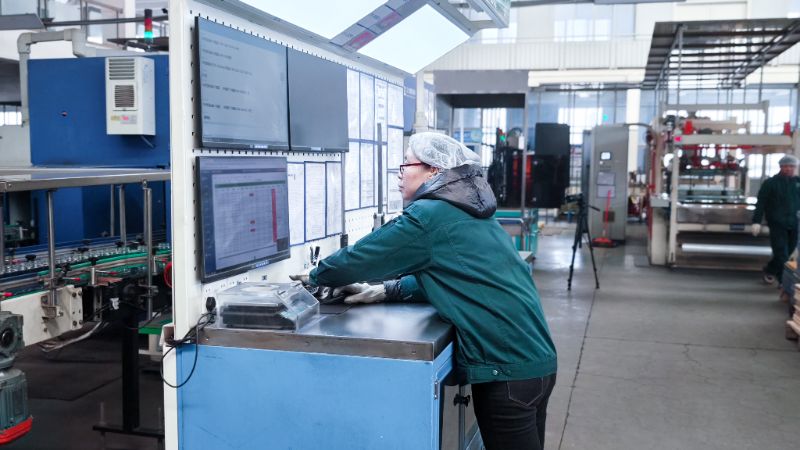
Manual quality inspection at the production base, alongside 100% airtightness and thermal shock testing.
Where the same format carries different constraints
A mason-style jar body can serve several end uses, but the constraint logic changes with each one.
· Honey. EU honey must comply with Council Directive 2001/110/EC, which sets compositional requirements and reserved names. Fill weight and headspace have to be settled alongside the jar capacity, and the closure must deliver the airtight seal the product needs.
· Jam, jelly and marmalade. Council Directive 2001/113/EC defines reserved names and composition for these products in the EU, which again constrains fill level and labelling rather than jar shape.
· Pickles and preserved vegetables. The documented reference case is a food processing plant using glass jars for a pickled product line, where the stated requirement is a food-grade jar with good sealing performance and corrosion resistance.
· Coffee and dry goods. The dominant requirement is moisture blocking. The airtight seal is designed to block moisture and dust, which is the relevant performance attribute rather than thermal resistance.
· Spices and small-format retail. Small capacities from 200 ml upward pair with the same closure system; the specification decision shifts to labelling area and to whether a decal or screen print is used.
· Candle jars. Candle glass jars fall inside the scope of the ASTM F2417 candle fire-safety specification, where jar geometry and heat behaviour are safety variables rather than aesthetic ones. The edition in force and its container-specific test clauses should be confirmed with the supplier rather than assumed.
· Household storage. Reusable jars with wide-mouth access and no hard-to-reach interior corners suit dry storage, where the specification emphasis moves to cleaning and reusability rather than to preservation.
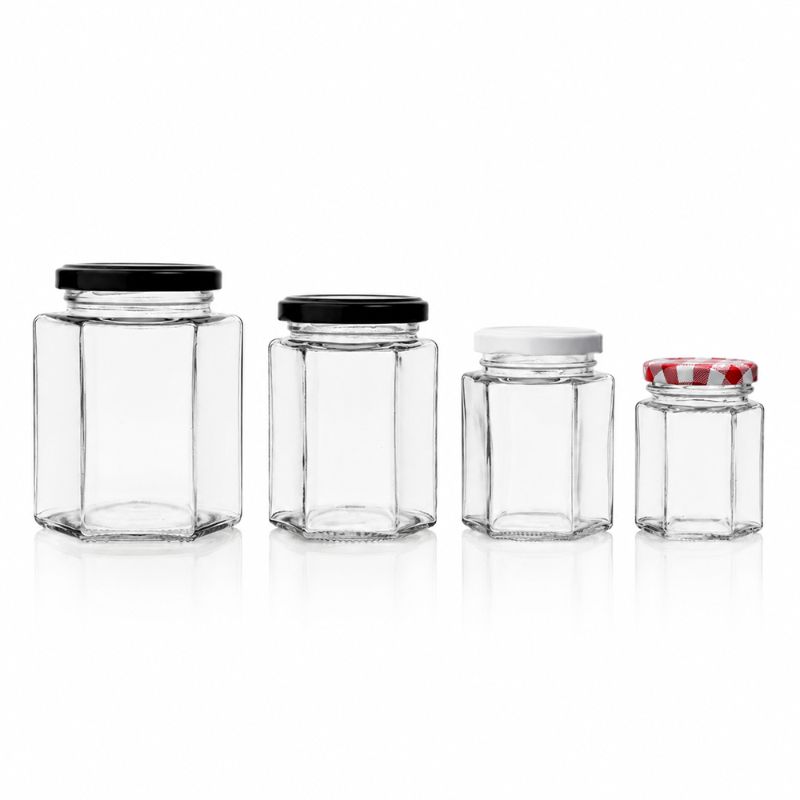
Jam and preserve formats: the EU product directive constrains fill and labelling, not the jar shape.
Specification and compliance comparison
The first table consolidates the documented specification levers. The second consolidates the compliance instruments that a mason jar buyer has to hold per market.
Table 1 — Documented mason jar specification levers
| Specification lever | Documented options |
| Capacity | 200 ml, 250 ml, 500 ml, 750 ml, 1000 ml, 1500 ml |
| Shape | Hexagonal, round, square, cylindrical |
| Jar material | Borosilicate glass or soda-lime glass |
| Glass colour | Clear as standard; other colours customizable |
| Lid material | Wood, aluminum, plastic, tinplate screw cap; snap-on lids also available |
| Seal material | Food-grade silicone or rubber |
| Closure performance | Airtight seal; blocks moisture and dust; leak-proof for long-distance transport |
| Decoration | Screen printing, hot stamping in gold or silver, decals; printed logos, labels, bespoke exterior designs |
| Order frame | MOQ 5,000 pcs; 500,000 pcs/month capacity; OEM/ODM; pre-shipment inspection |
Table 2 — Compliance instruments by market
| Market | Instrument | What it constrains for a mason jar |
| European Union | Regulation (EC) No 1935/2004, Article 3 | General safety duty: no transfer of constituents that could endanger health, change food composition, or deteriorate organoleptic characteristics |
| European Union | Commission Regulation (EC) No 2023/2006 | Documented good manufacturing practice and quality assurance for food-contact glass and closures |
| European Union | No harmonised specific EU measure for glass | Compliance relies on the framework regulation, GMP and national provisions rather than an EU-wide glass compositional limit list |
| European Union | Regulation (EU) 2025/40 (PPWR), adopted 2024-12-19 | Design-for-recycling requirements and material-specific recycling targets, replacing the Directive 94/62/EC framework |
| United States | 21 CFR 175.300 | Resinous and polymeric coatings used as the food-contact surface, including organic coatings on glass containers and closures |
| China | GB 4806.5-2016 | National food safety standard for glass products in contact with food |
| Cross-market | COA ZTS2510311ZZRC, model IDG102, issued 2025-11-05 | Product-level analysis referencing EN 14372, EN 14350, EPA 3052, ASTM D3421, EPA 3540C/3550C |
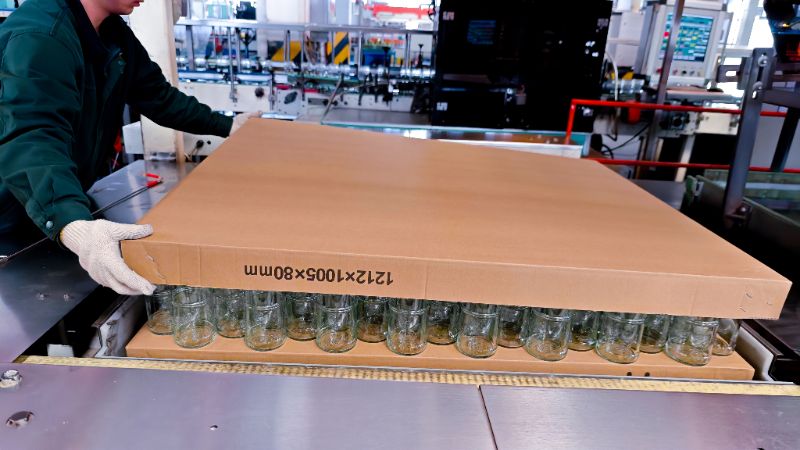
Packing stage: dividers and foam cushioning are the documented control against transport breakage.
Frequently asked questions
1. What food-contact documents should arrive with a mason jar order?
At minimum, a product-level Certificate of Analysis and the destination-market evidence. For the GLASS JAR product, model IDG102, the COA is number ZTS2510311ZZRC, issued by SHENZHEN ZTS TESTING SERVICE CO., LTD. on 2025-11-05 for the Global market, referencing EN 14372, EN 14350, EPA 3052, ASTM D3421 and EPA 3540C/3550C. For the EU, add evidence of the Article 3 safety duty under Regulation (EC) No 1935/2004 and of GMP compliance under Commission Regulation (EC) No 2023/2006. For coated or decorated ware sold in the United States, confirm the coating position against 21 CFR 175.300. For China, the applicable standard is GB 4806.5-2016. Because the EU has no harmonised glass-specific measure, member-state national requirements should be checked individually.
2. What can actually be customized on a mason-style jar?
Documented customization covers logo, packaging, graphic, colour, surface handling, cap, size, mould and printing. Printing options are screen printing, hot stamping in gold or silver, and decals, and printed logos, labels and bespoke exterior designs are all available. The standard glass colour is clear, with other colours customizable. Structural choices are broader than decoration alone: capacities run from 200 ml to 1500 ml, shapes include hexagonal, round, square and cylindrical, glass can be borosilicate or soda-lime, and closures can be wood, aluminum, plastic or tinplate screw cap with a food-grade silicone or rubber seal.
3. What is the minimum order quantity and how is the price built?
The MOQ is 5,000 pieces for standard mass-production pricing, and FOB, CIF and EXW terms are all offered. Price is built from the specification rather than published as a fixed band: capacity, glass type, closure material, decoration method and order quantity each move the quotation. Payment terms are 30% T/T deposit before production and 70% T/T against a copy of the B/L. Production capacity is 500,000 pieces per month, which is the figure to check against a seasonal peak before committing to a delivery schedule.
4. How is a mason jar order validated before shipment?
Validation happens on three levels. At product level, every single jar undergoes 100% airtightness testing and thermal shock testing, and raw materials and finished products are tested against FDA and SGS standards for lead and cadmium, with regular randomized follow-up testing. At packaging level, cartons are equipped with dividers and foam cushioning, and drop tests are carried out prior to shipment. At order level, goods are inspected by pre-shipment test before they leave, with the test report provided — and the test items and AQL should be agreed before production starts, not after.
5. What lead time should be planned for?
Lead time is quoted in bands: 7 days for 5,000–10,000 pieces, 20 days for 10,000–50,000 pieces, and a negotiable delivery time above 50,000 pieces. Two planning notes follow from that structure. First, the 5,000-piece MOQ sits at the bottom of the fastest band, so a launch order and a scale-up order run on different clocks. Second, decoration and custom moulds sit outside the volume band itself and should be scheduled explicitly. Buyers comparing suppliers should ask for the lead time against their own quantity band rather than against a headline figure.
Conclusion
A mason jar order becomes predictable once the constraint set is written down: capacity tied to a product standard, glass type and colour, a closure and seal specified by performance rather than appearance, decoration checked against coating rules, a compliance file assembled per destination market, and a commercial frame of MOQ, inspection and lead time agreed in advance. The compliance side deserves the most attention, because the EU regulates glass through a framework duty and mandatory GMP rather than a glass-specific measure — which means the evidence has to be requested, not assumed.
IDEA PACKAGE, the export brand of Anhui IDEA Technology Imp & Exp Co., Ltd., documents each of those levers on its glass jar platform, from 200 ml to 1500 ml, with borosilicate or soda-lime glass, four closure families, food-grade seals, and a product-level COA for model IDG102.
Next step: sample or quotation
Send the fill volume, glass type, closure preference and decoration method, and IDEA PACKAGE will quote against the matching capacity band — from 200 ml sample jars to 1500 ml storage formats. Sample requests and MOQ-level quotations are handled directly.
Email: tom.ideabottle@gmail.com | Tel / WhatsApp: +86 185-5501-9935
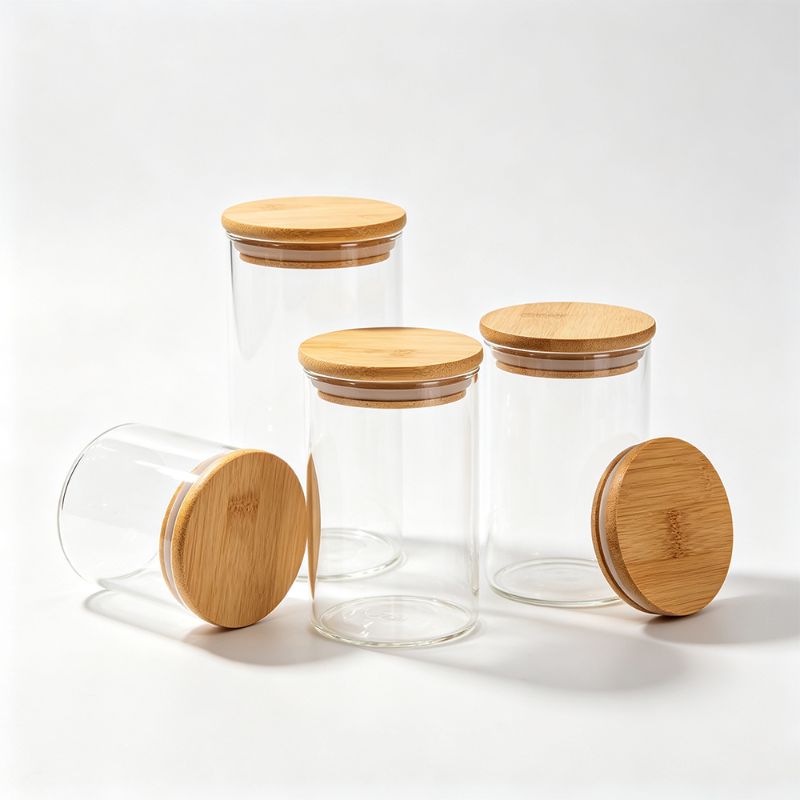
Glass storage jar formats — sample and quotation requests are matched to capacity, closure and decoration.
Source notes: company and product specifications are the manufacturer's own documented data. Market sizing is attributed to Grand View Research (glass packaging market, forecast to 2030). Regulatory statements reference Regulation (EC) No 1935/2004, Commission Regulation (EC) No 2023/2006, Regulation (EU) 2025/40, Directive 94/62/EC, 21 CFR 175.300, GB 4806.5-2016, Council Directive 2001/110/EC, Council Directive 2001/113/EC and HS heading 7010. Numeric recycling targets under Regulation (EU) 2025/40 are not quoted here and should be verified against the consolidated legal text before being used in a specification.