PET Preform OEM Capability: Custom Neck, Weight and Mold Explained
What PET Preform OEM Capability Actually Means
PET preform OEM capability isn't about having injection moulding machines — most factories do. It's about whether a supplier can take your bottle design, translate it into a repeatable preform specification that passes food-contact compliance, and then produce it at commercial volume without drift between batches.
If you're a buyer evaluating Chinese PET preform OEM manufacturers, the real test isn't a catalogue photo or a factory tour video. It's whether the supplier can align six things before the first production run: neck finish, weight, color, mold, packaging, and documentation. Get any of those wrong and you'll find out on the blowing line, at the filling plant, or during customs clearance — not in the quotation stage.
IDEA PACKAGE runs OEM and ODM production for custom PET preform and bottle preform projects. Customization options cover logo, packaging, graphic, neck size, weight, color, and mold. Published commercial terms include a 10,000-piece MOQ and 500,000 pieces of monthly capacity.
One quick note on search terminology: buyers type preform, perform, perform preform, bottle preform, PET bottle preform, oil preform, and 28mm PET preform — often describing the same purchase object. The spelling varies. The technical requirements don't. Whatever term led you to a supplier, you still need to confirm the neck-finish drawing, weight, resin grade, color, cap match, and packing method.
Where Custom Preform Projects Actually Fail
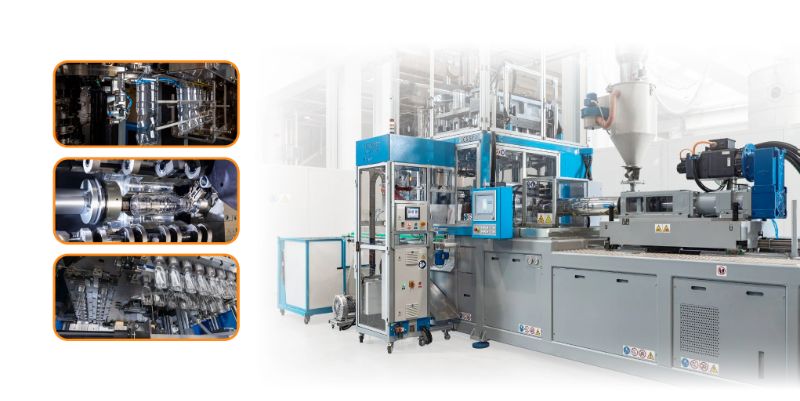
A custom PET preform order is rarely lost at the injection stage. It breaks down at the interfaces — the seams between your bottle design, the preform spec, the cap, the blow-moulding line, and the commercial order terms. That's why an OEM capability review should be built around what must be locked down before production, not around general factory claims.
Neck-finish interface: A "28mm PET preform" search or a bottle drawing must resolve to a defined neck-finish standard — thread profile, sealing type, cap match — not just a nominal diameter. Two preforms both labeled "28mm" can take entirely different caps.
Weight and wall interface: Preform weight drives bottle wall thickness, top-load strength, blowing behavior, and finished-case weight. It's not just a resin cost number.
Cap-fit interface: Preform and cap should be treated as a matched set. Cap fitment testing — not visual inspection — is what tells you whether the seal will hold under filling-line torque.
Mold and tooling interface: "Mold customization" is a published capability. "In-house mold engineering" is a different, more specific claim. The scope difference matters and must be defined in writing.
Commercial and quality interface: MOQ, lead time, pre-shipment inspection, payment terms, and packaging format should all be agreed before the first production slot is booked — not negotiated after the mold is cut.
The common thread across all five: the weakest link in a PET bottle preform project is usually an undefined assumption. A buyer assumes 28mm means a particular thread. A factory assumes an existing mold will work. A filling line assumes the cap will seal. A procurement team assumes a test report covers every migration parameter. Each assumption is manageable — but only when it's written into the specification and verified before mass production.
Why PET Preform Customization Moved Into Procurement Review
The market backdrop explains why OEM evaluation has gotten more disciplined.
Fortune Business Insights projects the global PET preform market to reach USD 78.74 billion by 2034, with Asia Pacific already valued at USD 22.84 billion in 2024. Mordor Intelligence reports that virgin PET still accounts for 72% of material demand as of 2026, and that edible oil packaging — where PET penetration exceeds 65% in developing economies — is a growth engine, not a niche.
Those numbers matter to an OEM buyer for three practical reasons. First, Asia Pacific remains the core supply base, so supplier comparison should focus on specific capability — not country of origin. Second, virgin PET still dominates, meaning food-grade virgin PET preforms remain a mainstream spec. Third, oil preform demand proves that application-specific requirements extend well beyond water and carbonated soft drinks.
Regulation adds another dimension. The EU Single Use Plastics Directive requires PET beverage bottles to contain at least 30% recycled content by 2030. An OEM preform project targeting EU beverage bottles therefore needs a material pathway, not just a mold and color approval. A supplier's standard food-grade preform is likely virgin PET — that doesn't automatically satisfy a recycled-content target. Buyers need to separate three distinct questions: food-contact compliance, recycled-content compliance, and bottle-performance validation. Different questions, different evidence.
How IDEA PACKAGE Supports Custom PET Preform Programs
IDEA PACKAGE operates as a PET preform manufacturing and export business serving global markets with OEM and ODM production. The published capability set is useful for buyers because it identifies both the customization variables that must be agreed and the commercial terms that determine whether a project moves from sample discussion to repeat supply.
OEM vs ODM: Who Owns the Specification?
OEM and ODM production are both available, and the distinction is commercially important. In an OEM model, the buyer controls the bottle design, neck-finish standard, weight, color, and packaging requirement — the manufacturer builds to that spec. In an ODM model, the project may start with a manufacturer-supported bottle preform concept and then move into customization.
Either way, the buyer should confirm two things in writing: who owns the final specification, and who approves the preform drawing that will be used for production and inspection. Without that clarity, disputes at the pre-shipment inspection stage become inevitable.
Customization Scope: Seven Variables to Lock Down
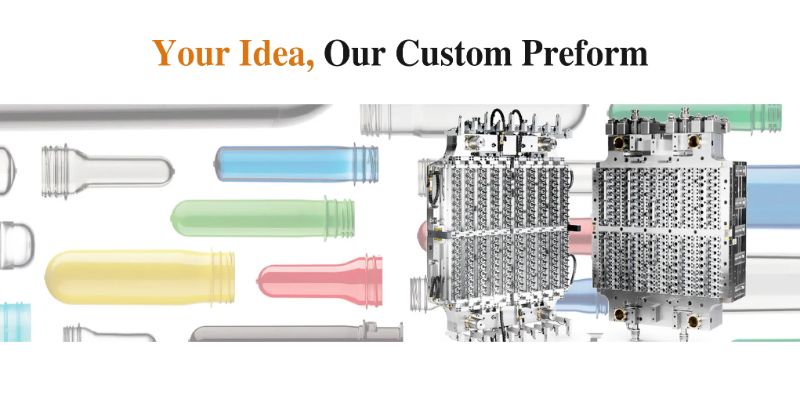
IDEA PACKAGE supports customization across seven variables: neck size, weight, color, mold, logo, packaging, and graphic. This is broader than a simple color change — it means a buyer can structure a custom preform program around the bottle neck, the preform mass, the visual identity, the packaging format, and the tooling route all at once.
The published neck-finish range includes PCO 1881, 29/25, 30/25, and 38mm. Buyers searching for a 28mm PET preform should not order by diameter alone. The neck-finish drawing, thread specification, cap sample, and sealing requirement all need to be confirmed together. A preform that's dimensionally close but not matched to the cap creates a filling-line problem that costs far more than the preform unit price.
Production Capacity and Commercial Terms
- Monthly capacity: 500,000 pieces
- MOQ: 10,000 pieces
- Lead time: 15 days for 10,001–200,000 pieces; negotiable above 200,000
- Quality control: Pre-shipment inspection
- After-sales: Remote support
- Export markets: Global
These terms are a starting point — not a substitute for a project-specific commitment. A custom PET preform with a new mold, a special color, and printed packaging won't follow the same production sequence as a repeat order in a standard neck size. Buyers should request a written production plan that states mold availability, color approval status, packaging approval, inspection method, and delivery date. The 15-day lead time only holds when the preform specification is fully locked and the order quantity falls within range.
Food-Contact Documentation: Review the Document Set, Not the Logo
Food-contact compliance should be reviewed as a document set, not a certification logo. Two independent food-contact plastic test reports are listed for this PET preform supply:
Report 1 — EU framework: Issued by TüV Rheinland/CCIC (Ningbo) Co., Ltd., certificate number 180327075a 001, dated 2025-04-23. References Regulation (EC) No 1935/2004 and Commission Regulation (EU) No 10/2011. Scope covers sensorial assessment, overall migration, specific migration of 18 metals, primary aromatic amines, colourfastness, terephthalic and isophthalic acid, ethylene glycol, and antimony.
Report 2 — Chinese GB framework: Issued by Taizhou Customs Comprehensive Technology Service Center, certificate number TZA25001027, dated 2025-06-25. References GB 4806.7-2023 along with GB 31604.8-2021, GB 31604.2-2016, GB 31604.9-2016, GB 31604.7-2023, and GB 31604.41-2016. Scope covers sensory, overall migration, KMnO? consumption, heavy metals (Pb), decolorization, and antimony (Sb).
The supplier states that preforms are moulded from food-grade virgin PET resin, not recycled material, and advises against hot filling and prolonged contact with highly acidic or high-alcohol products. That's a useful boundary line — it tells a buyer what the standard food-grade preform is designed for and what must not be assumed. For hot-fill, high-acid, high-alcohol, or EU recycled-content applications, confirm the applicable material and documentation before approving the preform for production.
Mold Customization vs In-House Mold Engineering: Don't Confuse the Two
Mold customization is part of the published capability. In-house mold engineering is a more specific claim — and buyers evaluating Chinese PET preform OEM manufacturers with in-house mold engineering should ask the supplier to define the scope in writing before assuming they mean the same thing.
Specific questions to ask:
- Does mold engineering mean new mold design from scratch, cavity changes to an existing mold, modification of an existing mold, or only the use of existing molds within a published neck-finish range?
- Who approves the mold drawing before cutting?
- Which dimensions are measured on the first article?
- What is the acceptance criterion for neck finish and weight?
This isn't a semantic detail. Mold scope determines the project timeline, the technical risk, and who carries the commercial responsibility if first articles don't match the bottle drawing. A supplier that supports mold customization can still be a strong partner — but the buyer should not convert a published customization option into an unverified in-house engineering claim. The right approach: request a mold-scope statement, a first-article inspection plan, and a cap-fitment test plan before the order is released.
From Bottle Concept to Repeatable Supply: Step by Step
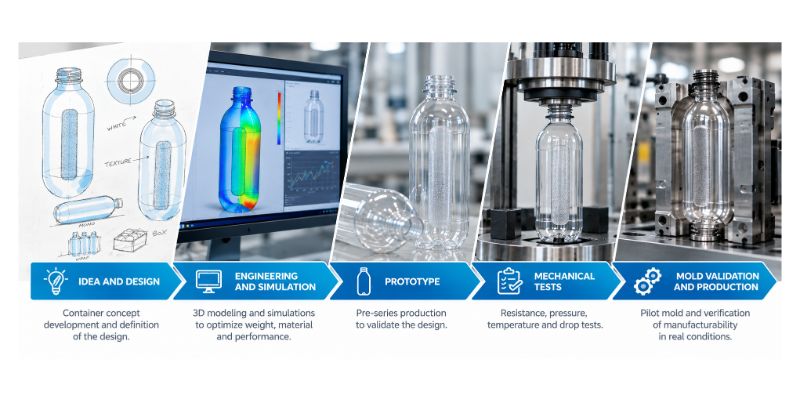
Step 1 — Define the bottle and neck-finish standard. Start with the bottle drawing, cap sample, and filling-line requirements. If the project is described as a "28mm PET preform," resolve the thread and neck-finish standard — not just the diameter. The published range includes PCO 1881, 29/25, 30/25, and 38mm. Map your bottle design to a defined finish before requesting a quotation.
Step 2 — Set preform weight and wall expectations. Specify the target preform weight, intended bottle volume, blow-moulding process, and top-load or pressure requirement. Weight isn't just a cost variable — it's a performance variable. The supplier should confirm how weight consistency gets checked in production.
Step 3 — Approve color, logo, graphic, and packaging. Use the published customization options to build a controlled approval list: color standard, logo artwork, graphic artwork, and packaging format. Keep the approved physical sample as the reference for pre-shipment inspection — not a digital file.
Step 4 — Confirm mold and tooling scope. Ask whether the project uses an existing mold, a modified mold, or a new mold. Request the mold-scope statement and the first-article dimensions that will be measured. Include neck finish and weight in the first-article report.
Step 5 — Match the preform to the cap. Buy preforms and caps as a matched set where possible. The supplier confirms that neck finish is tolerance-controlled with dimension spot checks and cap fitment tests. Verify the cap sample, application torque, and sealing test method before filling trials.
Step 6 — Agree commercial terms and acceptance criteria. Confirm the 10,000-piece MOQ, lead time for your planned quantity, Incoterm, pre-shipment inspection method, AQL, and payment terms. Published payment structure: 30% T/T deposit before production, 70% T/T against a copy of the B/L. Lead time: 15 days for 10,001–200,000 pieces; negotiable above 200,000.
Step 7 — Run production and verify before shipment. Pre-shipment inspection should confirm the approved color, packaging, neck dimensions, weight range, and documentation. For a custom project, the inspection report must be tied to the approved specification — not a generic product description.
Where Custom PET Preforms Are Used: Reference Cases
The published case examples show how custom preform supply translates across different filling operations. These are reported case outcomes, not a guarantee for every line.
- Bottled water: A water treatment plant reports an annual contract value of USD 500,000 for bottled water packaging. Highlighted properties: high transparency and good pressure resistance, with stable production and food-grade compliance.
- Bottled juice: A juice factory reports USD 400,000 per year. Result: stable filling performance with a qualified product rate, supported by high transparency and pressure resistance.
- Health supplements: A health supplement factory reports USD 500,000 annually. Highlighted properties: high transparency and pressure resistance, with stable filling performance.
- Edible oil: An oil processing plant reports USD 300,000 per year for bottled oil packaging. The preform is a food-grade PET unit with high transparency and stable mechanical performance.
In every case, what drove repeat orders wasn't a headline spec — it was repeatability. The same neck dimension, the same weight, and the same documentation across successive shipments.
What Must Be Defined Before an OEM Order
Before releasing a custom preform order, the following items should be confirmed in writing:
- Neck size: Customization is supported; published finishes include PCO 1881, 29/25, 30/25, and 38mm. Buyer provides bottle drawing, neck-finish standard, cap sample, and filling-line requirement. Verification: dimension spot checks and cap fitment tests.
- Weight: Customization supported. Buyer provides target weight, bottle volume, blow-moulding process, and performance requirement. Verification: automatic checkweighing rejects out-of-range units.
- Color: Color matching supported. Buyer provides color standard, approved sample, and lighting condition. Verification: color approval against agreed standard before production.
- Mold: Customization supported. Buyer clarifies whether the project needs a new mold, cavity change, modification, or existing mold. Verification: written mold-scope statement and first-article inspection plan.
- Logo and graphic: Customization supported. Buyer provides artwork files, print position, and packaging format. Verification: pre-shipment inspection against approved artwork.
- OEM or ODM model: Both available. Buyer provides project brief, specification ownership, and approval route. Verification: confirmed specification owner and production drawing sign-off.
Frequently Asked Questions
Are PET preforms food-safe, and what documentation supports food-contact use?
Food-contact safety should be verified through the applicable material declaration and test reports — not a logo. The listed documentation includes a TüV Rheinland/CCIC (Ningbo) report (certificate 180327075a 001, issued 2025-04-23) against EU 1935/2004 and EU 10/2011, and a Taizhou Customs report (certificate TZA25001027, issued 2025-06-25) against GB 4806.7-2023 and related GB standards. The supplier states that preforms are moulded from food-grade virgin PET resin, not recycled material, and advises avoiding hot filling and prolonged acidic or high-alcohol contact. Buyers with specific filling conditions should confirm suitability before approval.
Can a Chinese PET preform OEM manufacturer support in-house mold engineering and custom neck sizes?
Mold customization and neck size customization are both part of the published capability. The product range includes PCO 1881, 29/25, 30/25, and 38mm finishes. For in-house mold engineering specifically, ask the supplier to define whether that covers new mold design, cavity changes, modification of an existing mold, or only the use of existing molds. The acceptance plan should include neck-finish dimensions and cap fitment tests — because a custom neck size is only useful if the cap seats and seals correctly.
What customization options are available for a custom bottle preform project?
IDEA PACKAGE supports OEM and ODM production with customization across logo, packaging, graphic, neck size, weight, color, and mold. Color matching, mold customization, neck size, and weight customization are all supported. A buyer should convert those options into an approved specification list before production begins — not after.
What are the MOQ, lead time, and payment terms for bulk PET preform orders?
MOQ is 10,000 pieces. Lead time is 15 days for 10,001–200,000 pieces; above 200,000, delivery time is negotiable. Quality control includes pre-shipment inspection with the report provided before shipment. Acceptance criteria (AQL and test items) should be agreed in advance. Payment: 30% T/T deposit before production, 70% T/T against a copy of the B/L. Delivery terms: FOB, CIF, or EXW.
How are neck fit and weight consistency controlled before shipment?
Neck finish is tolerance-controlled with dimension spot checks and cap fitment tests. Weight consistency is controlled through automatic checkweighing, which rejects any unit outside the set range rather than packing it downstream. This also guards against thin walls that can fail during blowing, filling, stacking, or transport. For a custom project, review the inspection plan and agreed test items before production starts.
Evaluate PET Preform OEM Capability as a System
Custom PET preform supply is an engineering and documentation system. The supplier must control neck finish, weight, color, mold scope, packaging, and inspection. The buyer must provide a specification that connects the preform to the cap, the blow-moulding line, and the filling operation. IDEA PACKAGE supports OEM and ODM production for custom PET preform and bottle preform projects — with color matching, mold customization, neck size and weight customization, a 10,000-piece MOQ, 500,000 pieces of monthly capacity, and a 15-day lead time for orders of 10,001–200,000 pieces.
For buyers comparing Chinese PET preform OEM manufacturers, the strongest next step is a written capability review: neck-finish drawing, target weight, color standard, mold scope, cap sample, packaging requirement, annual volume, and required food-contact documentation. That package lets a supplier quote against the real project — not a generic preform.
Request a Custom PET Preform Review
Share your bottle drawing, neck-finish standard, target weight, color, cap sample, annual volume, and packaging requirement with IDEA PACKAGE. The team can confirm the applicable OEM or ODM route, MOQ, lead time, mold scope, and pre-shipment inspection plan.
Website: www.preform01.com Email: tom.ideabottle@gmail.com Tel / WhatsApp: +86 185-5501-9935