Tin Can Packaging OEM: Custom Aluminum Can Printing Guide
Custom printing turns a plain aluminum can into a branded beverage container, but printing is only the visible half of the capability. What buyers actually audit is whether a supplier can hold artwork accuracy, coating compatibility, seal integrity and delivery timing together at production volume. IDEA PACKAGE, the packaging brand of ANHUI IDEA TECHNOLOGY IMP&EXP Co., Ltd., produces aluminum cans in OEM/ODM mode from Hefei, China, with customization covering logo, packaging, graphic, printing, color, coating, size and capacity, at a stated minimum order quantity of 100,000 pieces.
This guide is written for buyers in the evaluation-to-execution stage: procurement managers, brand owners and beverage producers who have already shortlisted Chinese OEM beverage aluminum can manufacturers with custom printing and now need to confirm what each supplier can actually deliver. It sets out the capability layers to verify, the evidence IDEA PACKAGE can supply, the practical step-by-step sequence of a printed can project, and the parameters that decide whether a quote is workable.
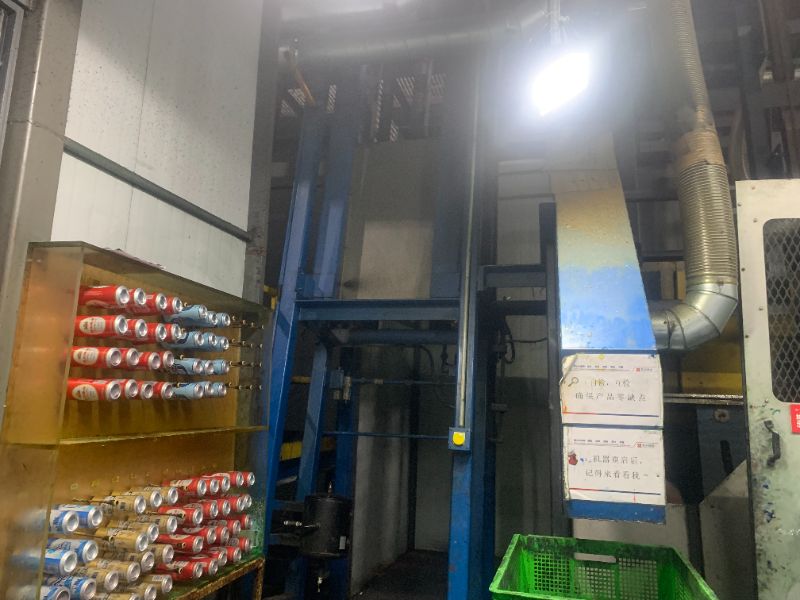
Printing workshop: decoration is applied in-line before the can body is finished and inspected.
What "Custom Printing Capability" Really Means
A supplier's claim to print custom artwork on beverage cans is not, by itself, a differentiator. In practice the claim splits into four layers, and each one can be checked separately before a purchase order is issued.
· Artwork engineering. Logos, graphics and color separations have to survive the physical decoration process and stay consistent across a long run. The relevant question is not "can you print my file" but "what will the printed can look like at unit 5,000 and at unit 500,000".
· Decoration and liner compatibility. Exterior printing, interior lining and any applied coating have to work as one system on a food-contact container. Ink, coating and lining choices interact with the beverage, the filling temperature and storage conditions.
· Dimensional and seal consistency. A printed can still has to run on an automatic high-speed filling and seaming line. If body dimensions or the sealing interface drift, the decoration is irrelevant because the line stops.
· Commercial thresholds. Minimum order quantity, lead-time tiers, inspection method and payment structure determine whether custom printing is even accessible at the buyer's planned volume.
The common failure in sourcing is to evaluate only the first layer. A supplier that shows attractive printed samples but cannot document lining compliance, seal testing or a stable lead-time schedule leaves the buyer carrying the risk into production.
Industry Background: Why Print and Compliance Are Audited Together
Aluminum and metal can formats are now used across beer, carbonated drinks, functional drinks and fruit wine, and the filling environment shapes what the container must do. IDEA PACKAGE's documented application conditions for its aluminum can line describe indoor production at normal temperature, dry warehouse storage, and use on automatic high-speed filling and seaming equipment matched with can filling machines, seamers and ink printing machines. The same documentation lists the special requirements that matter to buyers: BPA-free inner coating, food-grade construction and high airtightness.
That combination is why decoration decisions cannot be separated from food-safety decisions. The printed surface is a brand asset; the interior lining is a compliance asset. When a buyer asks a Chinese OEM manufacturer about custom printing, the competent answer covers both — the graphic specification and the coating specification, with evidence for each.
A second industry shift is documentation-driven procurement. Buyers increasingly ask for test reports, certificate of analysis (COA) verification and retention samples rather than verbal assurances, because those are the artefacts that survive an importer's own audit or a retailer's supplier questionnaire.
IDEA PACKAGE's OEM Printing Capability, in Verifiable Terms
IDEA PACKAGE is the packaging brand of ANHUI IDEA TECHNOLOGY IMP&EXP Co., Ltd., a Hefei-based one-stop packaging solutions provider producing glass, plastic and metal containers for the food, beverage, personal care, condiment and alcoholic beverage industries. Its metal packaging capability, as stated in its own production data, is summarised below.
· Production mode: OEM/ODM, so the buyer's brand, artwork and specification drive the output rather than a fixed catalogue item.
· Customization scope: logo, packaging, graphic, printing, color, coating, size and capacity.
· Monthly capacity: 300,000,000 pieces per month.
· Minimum order quantity: 100,000 pieces.
· Lead time: 7 days for 1–10,000 pieces; 15 days for 10,001–500,000 pieces; above 500,000 pieces the delivery time is negotiable.
· Quality control: pre-shipment inspection.
· Engineering resource: a 15-engineer R&D team supporting design and prototyping.
· Facility structure: three dedicated production facilities focused separately on glass, plastic and metal packaging.
· Certification status: ISO 9001, FDA and CE.
· Export footprint: products exported to more than 150 countries and regions, serving more than 2,500 clients worldwide.
For a buyer, the practical reading of these numbers is straightforward. A 300,000,000-piece monthly capacity means a 100,000-piece custom run is a small fraction of one month's output, so scheduling pressure is low. The 100,000-piece MOQ is the real gate: below that volume, standard mass-production pricing does not apply, and the lead-time tier of 7 days for 1–10,000 pieces is best understood as a small-quantity window rather than a commercial channel for branded retail runs.
Compliance Evidence That Supports Printed Orders
Decoration is applied to the outside of the can; the lining is what touches the beverage. IDEA PACKAGE specifies a BPA-free inner lining, verifies each incoming material batch against its COA before production, and keeps batch retention samples for traceability.
Test report on file: Bisphenol A (BPA) Test Report number ZTS25012103ERC, issued 12 February 2025 by Shenzhen ZTS Testing Service Co., Ltd. The report covers BPA testing of aluminum can coating against Regulation (EC) No 1935/2004, (EU) 2018/213, (EU) 10/2011 and CEN/TS 13130-13:2005, and applies to the global market.
Three named risk controls sit behind that report. Seal integrity is controlled by 100% airtightness testing on every unit before shipment rather than by sampling. Cap torque is controlled as a defined parameter. Coating adhesion is verified by adhesion testing that confirms the lining bonds firmly to the substrate. These are the checks a buyer should ask to see reflected in the pre-shipment inspection report.
Production Stages Behind a Printed Can
The metal packaging line documents a sequence that starts with raw material intake and ends with finished-can inspection. Aluminum coil is stamped, printed and dried, deep-drawn into the can body, cleaned, and then inspected — including a dedicated logo inspection and verification step that checks the printed decoration against the approved artwork before packing.
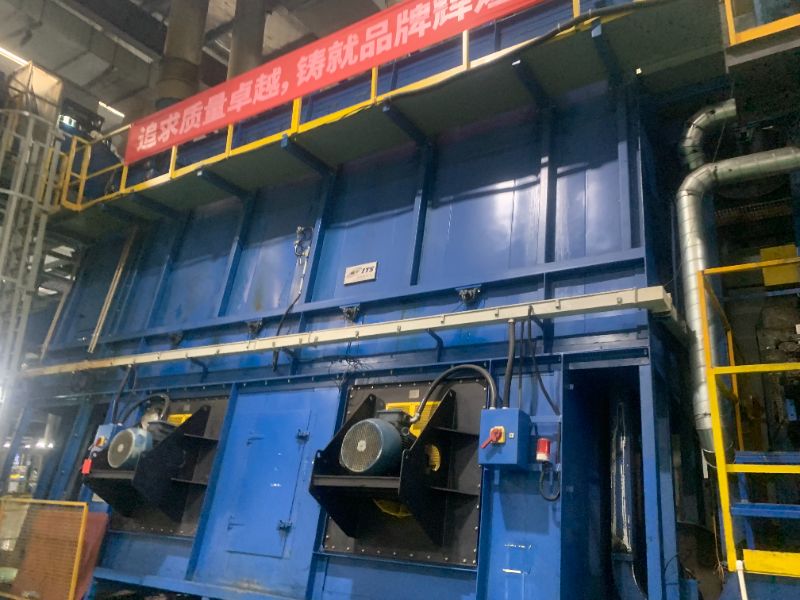
Drying after printing: decoration is cured before the can body moves to forming and cleaning.
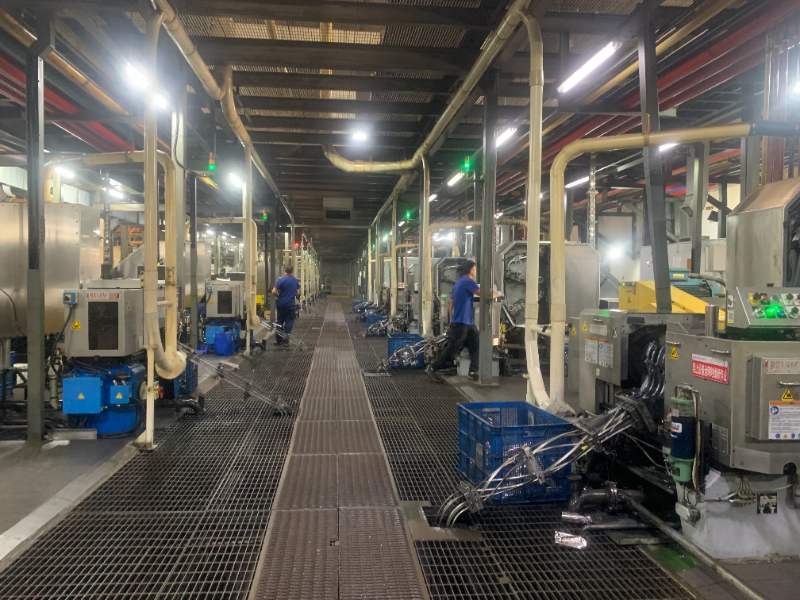
Deep-drawing: the formed cup becomes the can body that must hold pressure and seal on a high-speed line.
Because the printed decoration and the formed body come out of the same line, print quality and dimensional quality are not separate purchasing decisions. A buyer who approves a print proof without agreeing the dimensional and seal acceptance criteria has approved only half the specification.
Step-by-Step: Running a Custom-Printed Can Project
Step 1 — Define the container and the application
Start with the beverage, the filling method and the storage conditions, not with the artwork. IDEA PACKAGE's documented application covers beverage, beer, carbonated drink and functional drink production on automatic high-speed filling and seaming lines under indoor, normal-temperature conditions with dry warehouse storage. If the intended use sits outside that envelope, raise it before quoting.
Step 2 — Lock the decoration specification
Specify what is being customized: logo, graphic, printing, color, coating, size and capacity. Treat color and coating as engineering decisions rather than cosmetic ones, because they have to be compatible with the liner system and with the printing and drying stage.
Step 3 — Clear compliance before tooling
Request the lining specification, the COA verification process and the BPA test documentation. The relevant reference is report ZTS25012103ERC and the standards it cites. Confirm the retention-sample practice so that a future batch can be traced back.
Step 4 — Approve a proof and agree acceptance criteria
Use the design and prototyping resource to settle the graphic before mass production, then agree the inspection items and AQL in writing. IDEA PACKAGE's stated inspection method is pre-shipment testing with the report provided before the goods leave, and both sides should fix the test items before production starts rather than after.
Step 5 — Schedule against the lead-time tiers
Place the volume in the correct tier: 7 days for 1–10,000 pieces, 15 days for 10,001–500,000 pieces, and negotiable timing above 500,000 pieces. Remember that standard mass-production pricing starts at 100,000 pieces, so a decorated retail run normally sits in the middle tier.
Step 6 — Choose the Incoterm and settle payment
FOB, CIF and EXW are all offered. EXW suits buyers with their own forwarder, FOB suits buyers who nominate the vessel and pay freight, and CIF suits buyers who want freight and insurance covered to the destination port. Payment terms are 30% T/T deposit before production and 70% T/T against a copy of the bill of lading.
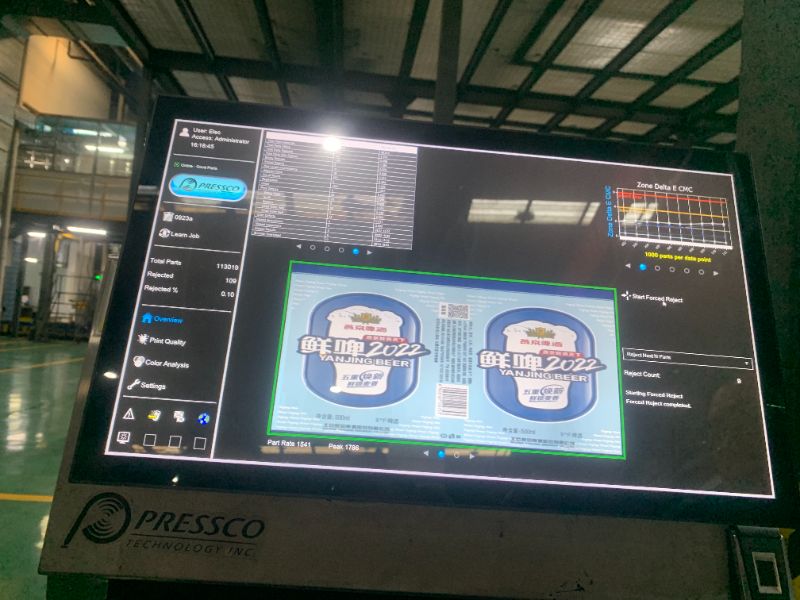
Logo inspection and verification: the printed decoration is checked against the approved artwork before packing.
Where Custom-Printed Aluminum Cans Fit
IDEA PACKAGE's aluminum can supply record shows the categories where a printed can carries commercial weight. Reported annual contract values are shown as stated; project durations are not publicly disclosed.
· Brewery, United States — annual contract value $1.2 million. Packaging material for canned beer production. In beer, the can surface is the primary brand carrier at the point of purchase, so print consistency across a long run matters as much as the container itself.
· Fruit winery, United Kingdom — annual contract value $800,000. Packaging material for canned fruit wine production. Fruit wine brings the corrosion-resistance and sealing requirements of an acidic beverage into the specification.
· Beverage plant, United Arab Emirates — annual contract value $500,000. Packaging material for canned beverage production.
· Beverage plant, Kazakhstan — annual contract value $500,000. Packaging material for canned beverage production.
· Fruit winery, South Korea — annual contract value $400,000. Packaging material for canned fruit wine production.
Across these projects the reported outcome is consistent: stable production operation meeting food-grade packaging requirements, with food-grade construction, good sealing performance and corrosion resistance cited as the operative characteristics. For a buyer planning a printed run, that is the useful signal — the decoration is delivered on a container that has already been qualified for food-grade filling.
Comparison Table: Verified Parameters at a Glance
| Parameter | Verified figure | What it means for a printed-can buyer |
| Production mode | OEM/ODM | Brand, artwork and specification drive output; no fixed catalogue constraint |
| Customization scope | Logo, packaging, graphic, printing, color, coating, size, capacity | Decoration and container format can be specified together |
| Monthly capacity | 300,000,000 pcs/month | A 100,000-piece run is a small share of monthly output |
| Minimum order quantity | 100,000 pcs | Below this volume, standard mass-production pricing does not apply |
| Lead time, 1–10,000 pcs | 7 days | Applies to small quantities, not to standard priced runs |
| Lead time, 10,001–500,000 pcs | 15 days | The normal window for a decorated commercial run |
| Lead time, above 500,000 pcs | Negotiable | Scheduling is agreed per project |
| Quality control | Pre-shipment inspection | Inspection items and AQL should be agreed before production |
| Incoterms | FOB, CIF, EXW | Chosen by whether the buyer has a forwarder and controls freight |
| Payment | 30% T/T deposit, 70% T/T against copy of B/L | Capital is committed before shipment, so cash flow planning matters |
| BPA compliance | Report ZTS25012103ERC, issued 12 Feb 2025 | Coating tested against Regulation (EC) No 1935/2004, (EU) 2018/213, (EU) 10/2011, CEN/TS 13130-13:2005 |
| Facility certification | ISO 9001, FDA, CE | Supports importer and retailer supplier documentation |
Capability Gaps to Test Before You Commit
Three failure modes recur in aluminum can supply, and each has a defined control that a buyer can request as evidence.
Leakage and seal failure
Documented triggers include a lid not tightened to the specified torque, an aged, misaligned, contaminated or missing sealing ring, drop or impact damage, a pressure change, or an undetected sealing defect. The control is seal integrity management: 100% airtightness testing before shipment, rejection of failed units before packing, correct reassembly after washing, and avoidance of over-tightening.
Coating delamination
Delamination comes from substrate deformation after impact or dropping, or from poor adhesion caused by a coating batch quality issue. The control is adhesion testing of the inner lining plus thermal-shock resistance. If a coating begins to peel or flake, the container should be withdrawn from food or beverage use immediately.
BPA migration
Migration risk rises with filling liquid above the rated temperature, prolonged contact with acidic or oily contents, an aged or damaged lining, prolonged storage, or a non-compliant incoming batch. Controls are a BPA-free lining as the specified material, COA verification on every incoming batch, batch retention samples, and a stated temperature range in the product manual.
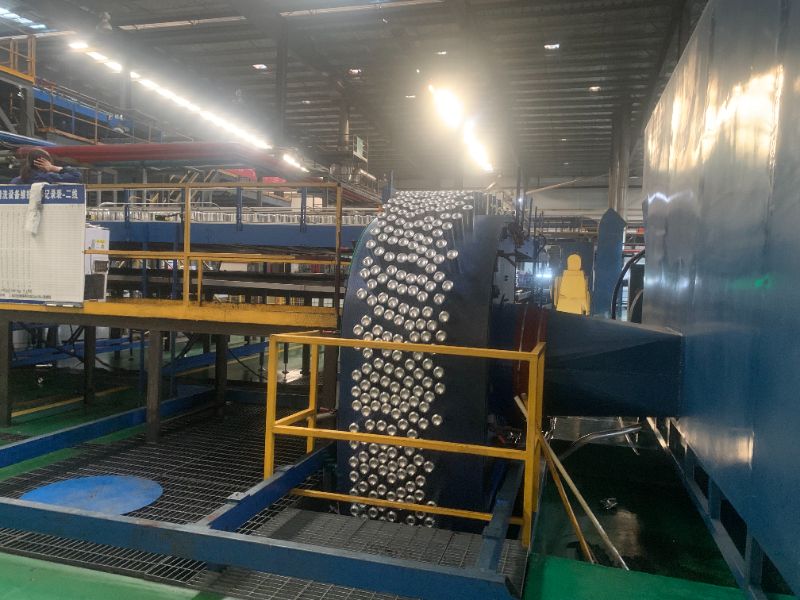
Can cleaning: the body is cleaned before inspection, so residue does not reach the filling line.
Frequently Asked Questions
Do custom-printed aluminum cans from a Chinese OEM meet food-contact requirements?
IDEA PACKAGE specifies a BPA-free inner lining and verifies each incoming material batch against its COA before production, with batch retention samples kept for traceability. The BPA Test Report on file — number ZTS25012103ERC, issued 12 February 2025 by Shenzhen ZTS Testing Service Co., Ltd. — covers aluminum can coating against Regulation (EC) No 1935/2004, (EU) 2018/213, (EU) 10/2011 and CEN/TS 13130-13:2005. Facility certification includes ISO 9001, FDA and CE. Food-contact compliance is determined by the lining and its verified test data, so review the coating documentation alongside the decoration specification rather than in place of it.
What can actually be customized on an OEM beverage can?
IDEA PACKAGE lists customization across logo, packaging, graphic, printing, color, coating, size and capacity, produced in OEM/ODM mode. A 15-engineer R&D team supports design and prototyping, which is where a graphic specification should be settled before mass production. Monthly capacity is 300,000,000 pieces, so decoration changes can be absorbed within a normal production schedule as long as the customization is agreed before tooling and printing begin.
What order volume does custom printing require, and how is it paid?
The stated minimum order quantity is 100,000 pieces, which is also the threshold for standard mass-production pricing. Delivery terms are FOB, CIF or EXW: EXW suits buyers using their own forwarder, FOB suits buyers who nominate the vessel and pay freight, and CIF suits buyers who want freight and insurance covered to the destination port. Payment is 30% T/T deposit before production and 70% T/T against a copy of the bill of lading, so the deposit is committed before the goods leave the factory.
Can I approve the print and the quality result before mass production?
Design and prototyping support is available through the R&D team, and the inspection method is pre-shipment testing with the test report provided before the goods leave. The working rule stated by IDEA PACKAGE is that the test items and AQL are agreed before production starts, not after. Print verification is supported by a dedicated logo inspection and verification step, and the pre-shipment report should also reflect 100% airtightness testing, cap torque control and coating adhesion testing.
How long does production take for printed aluminum cans?
Lead time is stated in tiers: 7 days for 1–10,000 pieces, 15 days for 10,001–500,000 pieces, and a negotiable delivery time above 500,000 pieces. A decorated commercial run at or above the 100,000-piece MOQ therefore normally falls in the 15-day tier, excluding shipping and any artwork or sampling work that precedes production. To confirm timing against your own filling schedule, send the container format, print specification and target volume to the IDEA PACKAGE team for a quote.
Conclusion
Evaluating custom-printed aluminum cans is an exercise in separating decoration from capability. IDEA PACKAGE can print logos, graphics, colors and coatings on an OEM/ODM basis, at 300,000,000 pieces per month, on a container line documented for food-grade, BPA-free, high-airtightness beverage use and backed by BPA test report ZTS25012103ERC. The parameters that decide whether a project runs smoothly are unglamorous: a 100,000-piece MOQ, a 15-day production window for most commercial volumes, pre-shipment inspection with agreed AQL, and a 30/70 T/T payment structure.
Buyers who verify those four items before issuing a purchase order — and who review the coating documentation alongside the artwork proof — are evaluating the supplier's real capability rather than its sample case.
Next step: sample, quote or specification review
Send your can format, print specification and target volume to IDEA PACKAGE for a quotation, or request a pre-production sample discussion before committing to a 100,000-piece run. Compliance documents, including the BPA test report and the pre-shipment inspection process, can be reviewed before the order is placed.
Email: tom.ideabottle@gmail.com | Tel / WhatsApp: +86 185-5501-9935 | Website: www.ideabottles.com
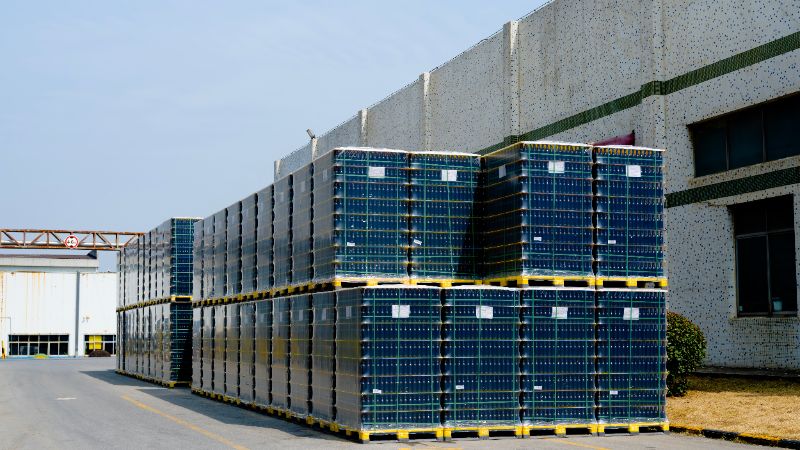
Export packing: goods are inspected before shipment and released with the pre-shipment test report.
IDEA PACKAGE is the packaging brand of ANHUI IDEA TECHNOLOGY IMP&EXP Co., Ltd., Hefei, Anhui, China — a one-stop packaging solutions provider for glass, plastic and metal containers.