What Factory Evidence Backs Aluminum Can Capability Claims?
In aluminum can procurement, capability claims are easy to make and harder to verify. For a buyer at the decision stage, the useful question is not whether a supplier says it can form a can body, control an inner coating, or deliver consistent production. The useful question is which parts of that claim can be observed, tested, or traced to a batch record. This article sets out a buyer's verification list for aluminum can capability, with the evidence a buyer should request before accepting a supplier's claims.
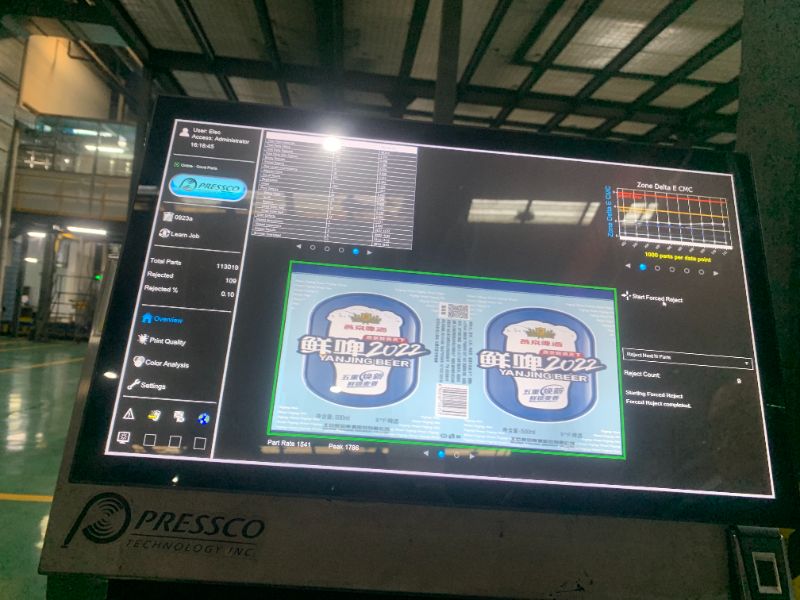
Logo inspection and verification machine: an example of an observable inspection point in a can production line. Image: IDEA PACKAGE.
Why Capability Claims Need Factory Evidence
Aluminum cans are food-contact, pressure-bearing, high-speed packaging. A supplier can describe capability in a brochure, but a buyer at the decision stage needs evidence tied to the actual product. That means evidence for how the can body is formed, how the inner coating is controlled, how seal integrity is tested, and how sample-to-production consistency is documented. The comparison is not which supplier uses stronger adjectives. It is which supplier can show a verifiable trail from incoming material to retained sample and pre-shipment test.
The same logic applies whether the RFQ concerns a soda can, beer can, carbonated drink, functional drink, coffee can, 3.5 soda can, aluminum tin can, or a cans-with-lids project. The package format may change, but the buyer is still comparing verifiable process control rather than brochure language.
The Evidence Checklist: What to Ask For and What It Proves
Use the following evidence groups as a buyer's verification list. Each item should be linked to a specific batch, product format, or test record. If an answer cannot be tied to a record or observation, treat it as verbal until proven otherwise.
| Evidence group | What it can prove | How to verify | Status |
| Incoming material COA | Confirms that incoming material is checked against a Certificate of Analysis before production. | Request the COA for the relevant incoming batch and check that it references the material and batch. | Verifiable document, if provided and traceable. |
| Can body forming observation | Shows control over the sequence from stamping aluminum coil to deep-drawing aluminum cups into cans. | Observe the forming stages on the line and compare the formed body with the approved sample. | Verifiable by observation and sample comparison. |
| Inner coating specification | Confirms that the lining is BPA-free by specification. | Review the lining specification and the incoming batch COA. | Verifiable if the specification and COA are provided. |
| Coating adhesion test | Indicates the bond strength of the inner coating. | Review coating adhesion testing records for the relevant product or batch. | Verifiable if test records are shared. |
| Seal integrity test | Shows that every unit passes a 100% airtightness test before shipment under seal integrity control. | Review the pre-shipment test report and confirm test items and AQL before production starts. | Verifiable if the report is provided. |
| Cap torque control | Supports closure performance control. | Review cap torque control records. | Verifiable if records exist. |
| Batch retention samples | Links the approved sample to a production batch. | Inspect retained samples against the approved sample. | Verifiable by physical sample. |
| Pre-shipment test report | Documents final inspection before goods leave. | Review the report before shipment and check that it covers the agreed test items. | Verifiable document. |
| Commercial terms | Clarifies the commercial basis of the order rather than the technical capability. | Check the contract or proforma invoice for MOQ, Incoterms, inspection terms, and payment terms. | Verifiable in commercial documents. |
| Verbal-only claims | Claims without a test, sample, or record do not prove capability. | Ask for the claim to be converted into a specific evidence item. | Verbal until documented. |
Can Body Forming: Observe the Coil-to-Can Sequence
Can body forming is not a single statement; it is a sequence. In a factory review, ask to see the stages that turn aluminum coil into a can body. The corpus images show stamping aluminum coils on a machine and deep-drawing aluminum cups into cans. These are observable process points. A buyer can compare the formed body with the approved sample and ask how the approved sample is retained for later batches. The purpose is not to judge one machine in isolation, but to confirm that the supplier can connect the process to a reference sample and a batch record.
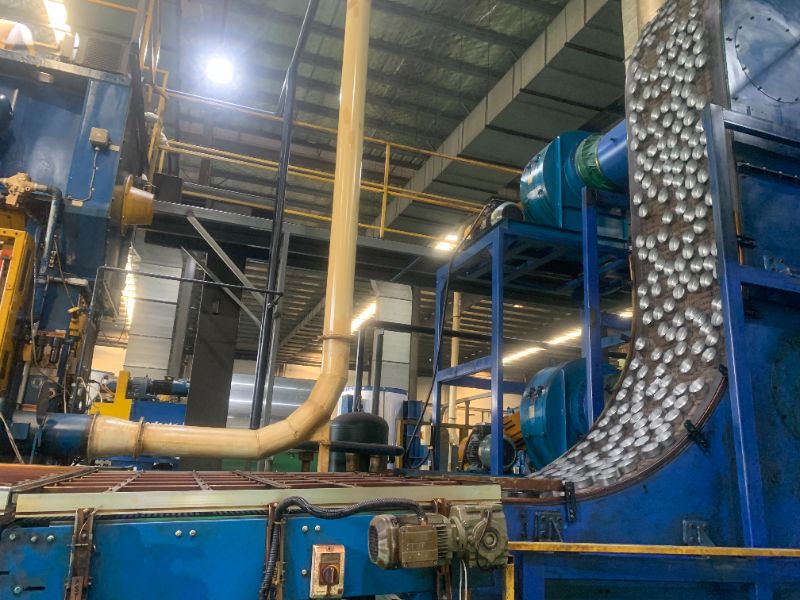
Stamped aluminum cup: an observable stage in the can body forming sequence. Image: IDEA PACKAGE.
At the decision stage, the relevant question is whether the supplier can show that the production batch follows the same forming route as the approved sample. If the answer is only a verbal assurance, it is not yet factory evidence. A buyer should ask to see the approved sample, the retained production sample, and the relationship between them.
Inner Coating and Food-Contact Control
For beverage cans, the inner coating is a food-contact control point. The corpus states that the lining is BPA-free by specification, incoming materials are verified against a Certificate of Analysis, and coating adhesion testing verifies bond strength. These facts give buyers three concrete evidence requests: the lining specification, the COA for the incoming batch, and the coating adhesion test record. The cleaning stage shown in the corpus is part of the process environment a buyer can observe, but the stronger evidence is the specification and test record tied to the batch.
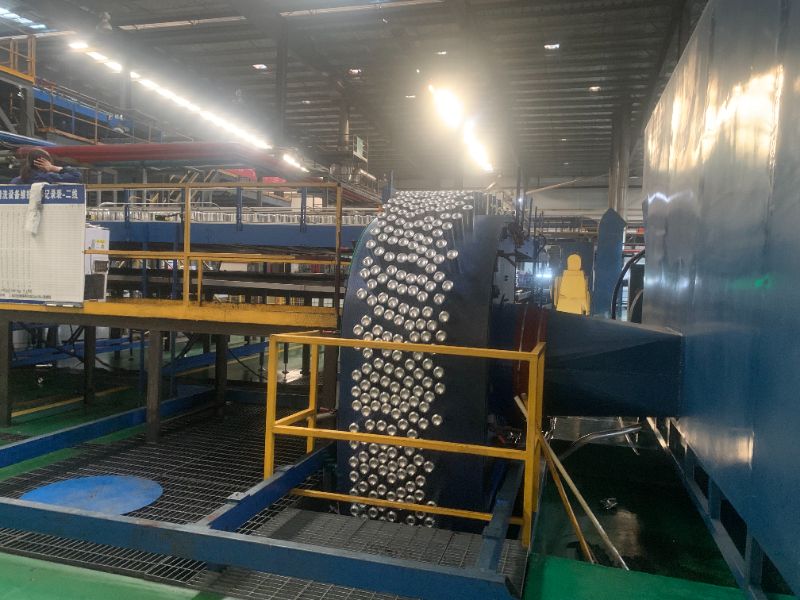
Aluminum can cleaning: a process stage a buyer can observe during a factory review. Image: IDEA PACKAGE.
Food-contact safety risks identified in the corpus include BPA migration, seal failure, and coating delamination. The corresponding controls are the BPA-free lining specification, 100% airtightness testing before shipment, cap torque control, and coating adhesion testing. A buyer should ask which of these are performed on every batch, which are supported by records, and which are only stated in a brochure.
Sample-to-Production Consistency: The Evidence Trail
Sample approval is useful only if it is linked to mass production. The corpus describes a batch retention sample management system, pre-shipment testing with a test report, and agreement of test items and AQL before production starts. Together, these elements form an evidence trail: approved sample, retained batch sample, pre-shipment test, and report. A buyer should ask to see how the retained sample is stored, how it is identified, and how it is compared with the approved sample. If the supplier cannot show the retained sample or the test report, the consistency claim remains verbal.
Verbal vs Verifiable: A Procurement Question Set
Before accepting a capability claim, convert it into a question with a verifiable answer. The following set is derived from the corpus facts and is designed for a supplier review meeting.
| Question | Verifiable answer to request | Status |
| Is the lining BPA-free? | Request the lining specification and incoming batch COA. | Verifiable if documents are provided. |
| Is each can leak-tested? | Request the pre-shipment test report showing 100% airtightness testing. | Verifiable if the report is provided. |
| Is coating adhesion tested? | Request coating adhesion test records. | Verifiable if records are provided. |
| Are cap torque controls in place? | Request cap torque control records. | Verifiable if records are provided. |
| Are batch retention samples kept? | Ask to inspect retained samples against the approved sample. | Verifiable by physical inspection. |
| What test items and AQL apply? | Agree test items and AQL before production starts. | Verifiable in the agreed inspection plan. |
| What are the commercial terms? | MOQ 100,000 pcs; FOB, CIF, or EXW; 30% T/T deposit and 70% T/T against copy of B/L. | Verifiable in contract documents. |
| What cannot be verified? | Unspecified claims about quality, capability, or capacity without a test, sample, or record. | Verbal until documented. |
How IDEA PACKAGE Supports an Evidence-Based Review
IDEA PACKAGE, the brand reviewed here, is supplied by ANHUI IDEA Technology Co., Ltd. (ANHUI IDEA Group), a packaging solutions provider headquartered in Hefei, China, with dedicated facilities for glass, plastic, and metal packaging. For aluminum can projects, the relevant evidence points in the corpus are specific: incoming materials are verified against a COA; the lining is BPA-free by specification; batch retention samples are managed; every unit passes a 100% airtightness test before shipment under seal integrity control; cap torque is controlled; coating adhesion is tested; and pre-shipment testing is supported by a report. The facilities are described as ISO 9001, FDA, and CE-certified. These are first-party facts that a buyer can request to see in a supplier review, not substitutes for the review itself.
IDEA PACKAGE also states a standard mass-production MOQ of 100,000 pcs, offers FOB, CIF, or EXW terms, and uses 30% T/T deposit before production with 70% T/T against a copy of the B/L. These terms are commercial evidence, not capability evidence, and should be kept separate in the buyer's decision matrix.
Application Fit: Where the Checklist Applies
The corpus scenario for aluminum cans covers beverage, beer, carbonated drink, and functional drink production in indoor production, normal temperature, and dry warehouse storage, using automatic high-speed filling and seaming lines. Matched equipment includes can filling machines, seamers, and ink printing machines. Special requirements include BPA-free inner coating, food grade, and high airtightness. These conditions explain why the evidence checklist focuses on body forming, inner coating, seal integrity, and sample consistency. The same checklist can be used when the RFQ concerns a soda can, beer can, coffee can, 3.5 soda can, aluminum tin can, or a cans-with-lids project, because the buyer is still comparing verifiable process control rather than brochure language.
Comparison with Traditional Solutions: Aluminum Can vs Plastic Bottle Packaging
Compared with plastic bottle packaging, aluminum cans are described in the corpus as offering a complete light barrier, a durable printing surface, and a metal packaging structure. The performance gap is specific: oxygen protection depends on package integrity and closure design, not on the metal alone. The maintenance trade-off is also real: the stackable design supports efficient storage and distribution, but dents may occur during handling. On efficiency, aluminum has high recyclability potential, while the actual benefit depends on collection rates and recycled content. For carbonated drinks, energy drinks, beer, juice, and ready-to-drink beverages, these characteristics can be relevant, but the buyer should still verify seal integrity and coating control rather than assuming that the material alone guarantees performance.
| Criterion | Aluminum can fact from the corpus | Buyer implication |
| Light barrier | Provides a complete light barrier. | Useful for light-sensitive beverages, but still dependent on package integrity. |
| Oxygen protection | Depends on package integrity and closure design. | Seal integrity and cap torque controls should be part of the review. |
| Printing surface | Durable printing surface and metal packaging structure. | Decoration quality should be checked against the approved sample. |
| Handling | Stackable design supports efficient storage and distribution; dents may occur during handling. | Storage and distribution controls matter; dents are a real limitation. |
| Recyclability | High recyclability potential; benefits depend on collection rates and recycled content. | Recyclability claims should be assessed with collection and recycled-content conditions. |
| Typical applications | Carbonated drinks, energy drinks, beer, juice, and ready-to-drink beverages. | Match the evidence checklist to the actual beverage and filling line. |
| Cost | Competitive unit cost for high-volume production; actual cost depends on material prices and order volume. | Commercial terms should be reviewed separately from technical evidence. |
Market Trend: Why Evidence Requests Are Increasing
Commercial research cited in the verified data projects the global aluminum beverage cans market at USD 46.2 billion in 2026. The same source reports that aluminum held 74.5% of the total metal cans market in 2025. These figures describe scale, not supplier capability. Their procurement relevance is that a larger, more competitive aluminum can market makes differentiation harder to judge from brochures alone. The verified data also describes digital printing for aluminum cans as maturing in 2026, enabling low MOQ and 19.2-ounce format customization. As customization and lower-volume programs expand, sample-to-production consistency becomes more important to document, because the buyer has more format and decoration variables to compare. These are market signals; they do not replace batch-level evidence.
Future Outlook
For decision-stage buyers, the direction is clear: capability claims are likely to be accepted only when they are tied to a record, a sample, or an observable process. Suppliers that can present a coherent evidence trail from incoming material COA to retained batch sample to pre-shipment test report will be easier to compare. Suppliers that rely on verbal descriptions will remain harder to qualify. The practical next step is to convert the checklist into an RFQ attachment and ask each supplier to respond with the specific evidence item, not a general statement.
FAQ
What MOQ applies to standard mass-production pricing?
100,000 pcs.
Which Incoterms can be used?
FOB, CIF, and EXW are available.
How are goods inspected before shipment?
Goods are inspected by pre-shipment test before they leave, and a test report is provided. Test items and AQL should be agreed before production starts.
What payment terms apply?
30% T/T deposit before production and 70% T/T against a copy of the B/L.
Is the lining BPA-free?
Yes. The lining is BPA-free by specification, and each incoming batch is checked against its COA before production.
Is every can leak-tested?
Yes. Every unit passes a 100% airtightness test before shipment under seal integrity control.
Can the inner coating peel or flake off?
Coating adhesion testing verifies bond strength. For handling, hand-wash with a soft sponge and avoid steel wool or harsh abrasives.
Company reference: IDEA PACKAGE, www.ideabottles.com.