Can You Use Beer Bottles for Champagne? Understanding Glass Bottle Pressure and Design
Beer and Champagne are both commonly sold in glass bottles, but the bottles are not interchangeable. A beer bottle may look sturdy enough to hold sparkling wine, yet its appearance alone cannot tell you whether it can handle the pressure inside.
This matters to breweries, wineries, beverage brands, and packaging buyers. Choosing the wrong glass bottle can lead to leakage, breakage, product loss, and safety problems during filling, storage, or transportation.
So, can you use beer bottles for Champagne? The short answer is: not unless the specific bottle has been tested and approved for the intended sparkling wine application.
Let's look at the differences between beer bottles and Champagne bottles, and what buyers should check before placing a bulk order.
1. Why Does Champagne Need a Special Glass Bottle?
Champagne is a sparkling wine that develops carbon dioxide during its production process. In traditional bottle fermentation, a second fermentation takes place inside the sealed bottle, creating substantial internal pressure.
That pressure remains inside the bottle during storage and transportation. The packaging must therefore be designed to withstand the conditions created by the wine, the production process, and temperature changes.
A standard glass wine bottle is generally intended for still wine. A bottle designed for regular beer may also have different performance specifications from one developed for traditional-method sparkling wine.
For this reason, Champagne producers use specially designed sparkling wine bottles rather than choosing packaging based on appearance or glass thickness alone.
2. Beer Bottles vs. Champagne Bottles: What Are the Differences?
Although both are glass beverage containers, beer bottles and Champagne bottles are developed for different products and filling requirements.
| Comparison | Beer Bottles | Champagne Bottles |
|---|---|---|
| Main application | Beer and selected carbonated beverages | Champagne and sparkling wine |
| Internal pressure | Depends on beer style and carbonation level | Designed for the pressure generated by sparkling wine |
| Glass structure | Varies by bottle design and intended use | Specifically engineered for sparkling wine applications |
| Bottle shape | Commonly long-neck, stubby, or specialty shapes | Typically wider body with sloping shoulders and a pronounced base |
| Closure | Commonly crown caps | Commonly sparkling wine corks with wire cages |
| Production requirements | Beer filling and capping processes | Sparkling wine filling and closure systems |
The exact specifications vary between manufacturers and bottle models. A 330ml beer bottle, for example, cannot be assumed to have the same pressure resistance as another 330ml bottle simply because they share the same capacity.
Glass Thickness and Bottle Weight
Champagne bottles often have a heavier glass structure than standard still-wine bottles. Their design takes internal pressure into account, along with the stresses associated with filling, storage, and transportation.
However, thicker glass does not automatically mean a bottle is suitable for Champagne. Bottle shape, glass distribution, manufacturing consistency, and residual stress all affect performance.
Buyers should request technical specifications and relevant pressure-test information for the exact bottle model instead of judging suitability by weight alone.
Bottle Shape and Base Design
Champagne bottles commonly feature a rounded body, sloping shoulders, and a deep indentation at the base, known as a punt.
These features are part of the bottle's traditional design and structural engineering. The shape also provides a familiar appearance for sparkling wine brands.
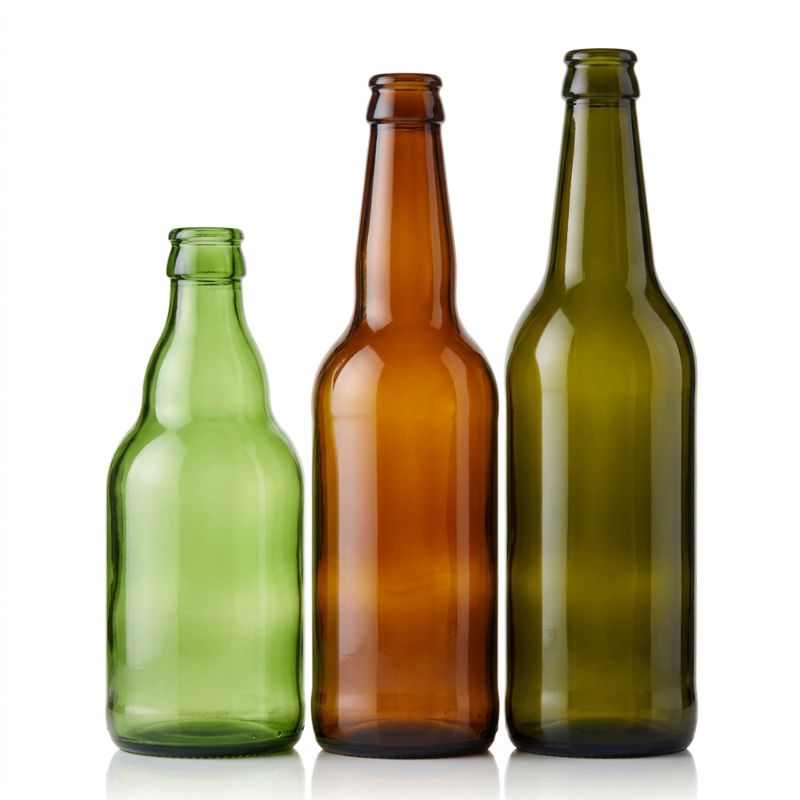
Beer bottles are available in many designs, including long-neck, short-neck, and custom-shaped formats. Their suitability depends on the original design specifications and the beverage they are intended to contain.
3. Can Beer Bottles Hold Champagne Pressure?
Not every beer bottle can safely hold Champagne.
The pressure inside a bottle depends on several factors, including carbonation level, temperature, headspace, and the beverage production method. Traditional-method sparkling wine creates different packaging demands from many standard beer products.
A beer bottle designed for one carbonation level should not automatically be used for a beverage with a higher pressure requirement.
Before considering a beer bottle for sparkling wine, buyers should confirm:
- The bottle's intended application and validated pressure limits.
- Whether pressure testing has been conducted on the exact bottle model.
- The temperature range expected during filling, storage, and shipping.
- The compatibility of the bottle neck and closure.
- Whether the bottle is suitable for the specific fermentation and filling process.
A visual inspection cannot establish pressure resistance. Even a bottle without obvious chips or cracks may have manufacturing defects or stress points that affect its performance.
Never test an unverified bottle by filling it with Champagne and observing whether it breaks. The suitability of the bottle should be established through the manufacturer's technical documentation and appropriate testing.
 |  |
|---|
4. What About Prosecco and Other Sparkling Wines?
Champagne is not the only sparkling wine on the market. Prosecco, Cava, Crémant, and other sparkling wines are also packaged in glass bottles.
However, these products may use different production methods and have different carbonation and pressure requirements.
For example, some sparkling wines undergo secondary fermentation inside the bottle, while others are carbonated in tanks before filling. The packaging requirements should be based on the actual beverage and production process.
A bottle suitable for one sparkling wine is not automatically suitable for another.
When sourcing glass bottles for sparkling wine, buyers should provide the supplier with the beverage type, target pressure, filling process, and expected storage conditions. This allows the manufacturer to evaluate the bottle against the real application.
5. How to Choose the Right Glass Beer Bottle for Your Brand
For breweries and beverage brands, choosing a suitable beer bottle involves more than selecting a popular shape or capacity.
Choose the Right Capacity
Common beer bottle capacities include:
- 330ml: A widely used size for retail beer and craft beer.
- 500ml: Suitable for larger individual servings and selected beer products.
- Other custom capacities: Available for brands with specific market or distribution requirements.
The right capacity depends on your product positioning, serving size, filling line, and target market.
Select the Glass Color
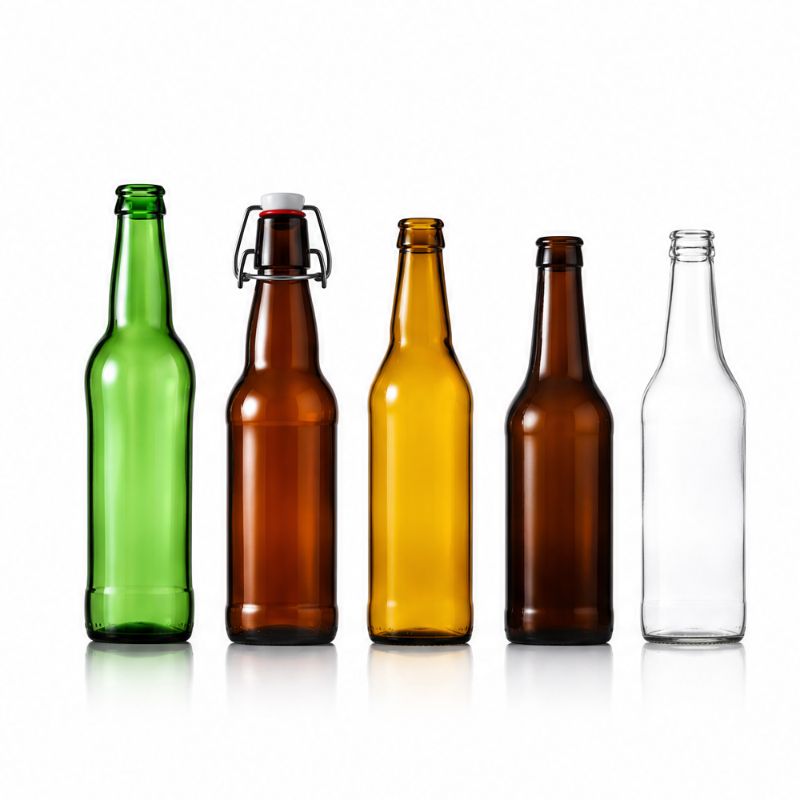
Amber glass beer bottles are widely used for beer packaging because the darker glass helps reduce light exposure compared with clear glass.
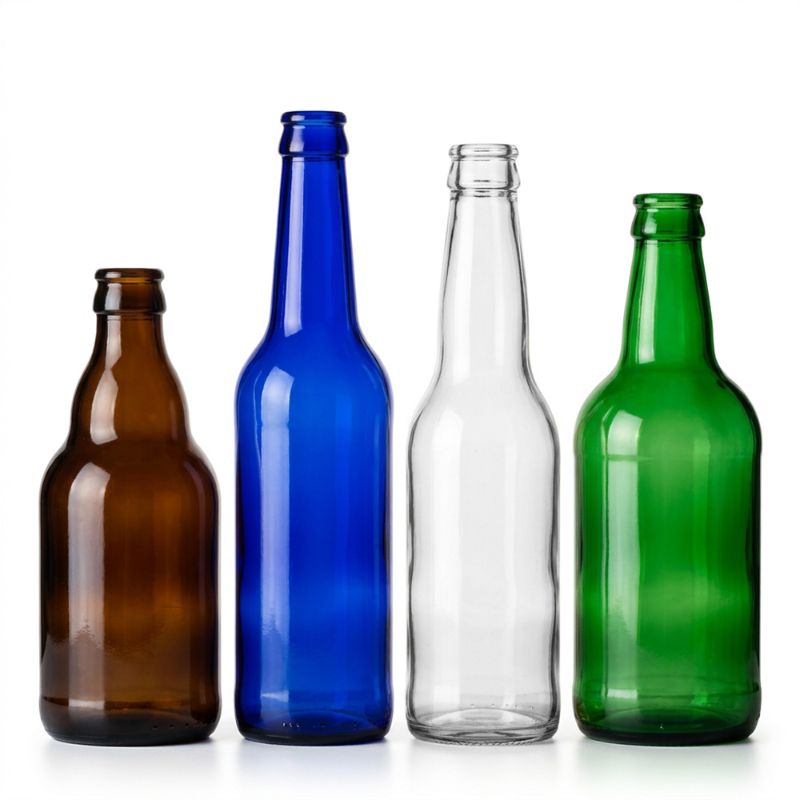
Clear and green glass bottles are also used for different product styles and brand presentations. The choice should take both product requirements and visual identity into account.
Check the Bottle Neck and Cap
Most conventional beer bottles use crown-cap finishes. Before purchasing, confirm the neck dimensions and cap specifications to ensure compatibility with your existing capping equipment.
For breweries operating automated filling lines, dimensional consistency is especially important.
Consider Customization
Custom glass beer bottles can help a beverage brand stand out on retail shelves. Depending on the product and manufacturing process, buyers may consider:
- Custom bottle shapes and capacities
- Amber, clear, or green glass
- Embossed or molded logos
- Screen printing and other decoration options
- Matching crown caps and packaging
For wholesale orders, it is best to confirm the design, technical drawing, sample, and production specifications before mass manufacturing.
6. What Should Buyers Ask a Glass Bottle Manufacturer?
When sourcing glass beer bottles or other carbonated beverage packaging, a few technical questions can make the purchasing process much clearer.
1. What beverage is the bottle designed for?
Confirm whether the bottle is intended for beer, sparkling water, soft drinks, or another carbonated beverage. Do not assume that one model works for every application.
2. What are the bottle's technical specifications?
Request the capacity, glass weight, dimensions, neck finish, and relevant performance information.
3. Is pressure testing available?
For pressurized beverages, ask whether the exact model has undergone suitable internal pressure testing. Confirm the test conditions and acceptance criteria.
4. Does the bottle match the filling line?
Check compatibility with filling equipment, capping machinery, and the intended closure.
5. Can the manufacturer provide samples?
Samples allow your team to inspect the appearance, dimensions, neck finish, and compatibility with existing production equipment before committing to a larger order.
These checks are particularly important for wholesale glass bottle orders, where a small specification mismatch can affect an entire production run.
7. Glass Beer Bottles for Wholesale and Custom Packaging
For breweries, beverage distributors, and private-label brands, a reliable glass bottle supplier should offer consistent product specifications and clear communication throughout the purchasing process.
IDEA Bottles provides a range of glass beer bottles for beverage packaging, including amber glass beer bottles, 330ml and 500ml options, and customizable designs.
Depending on the product model, buyers can explore different bottle shapes, colors, logo options, and matching closures.
When requesting a quotation, prepare the following details:
- Required bottle capacity and quantity
- Preferred glass color and bottle shape
- Neck finish and cap requirements
- Logo or decoration requirements
- Intended beverage and filling conditions
- Shipping destination and expected delivery schedule
For special applications involving sparkling wine or other high-pressure beverages, provide the technical requirements first so the supplier can assess whether a suitable bottle model is available.
Explore our Glass Beer Bottles to compare available packaging options for your beverage business.
Conclusion
Beer bottles and Champagne bottles may both be made from glass, but they serve different packaging requirements. A regular beer bottle should not be used for Champagne unless its pressure performance, bottle design, and closure system have been verified for that specific application.
For beverage brands and wholesale buyers, the safest approach is to choose a bottle based on its intended use and documented specifications, not simply its appearance, capacity, or weight.
Looking for wholesale glass beer bottles or custom glass beverage packaging? Contact IDEA Bottles to discuss your bottle specifications, customization requirements, and bulk order needs.